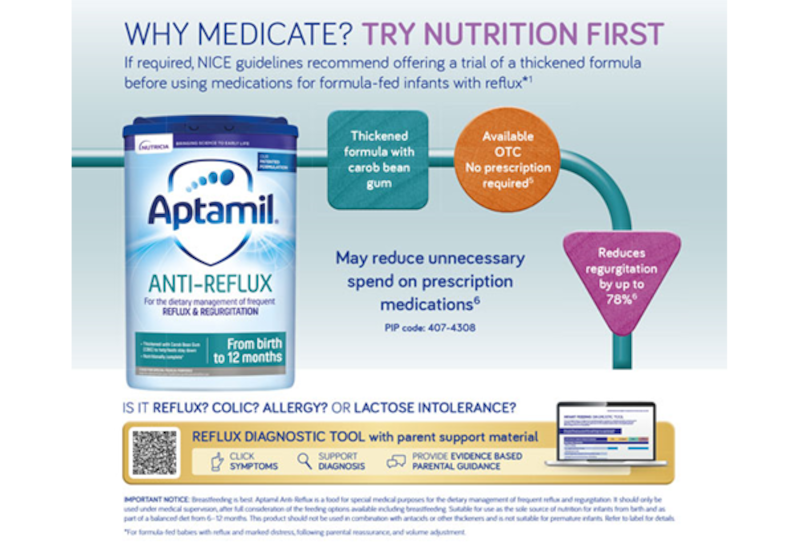
Download the Reflux consultation poster
here. For use by healthcare professionals only.
What is reflux?
Reflux, also known as ‘regurgitation’ or ‘posseting’, is when a baby brings milk back up after a feed, or is sick during or shortly after feeding.(1) It is a common condition that affects 40% of infants under one year, usually starting before the baby is eight weeks old, with symptoms resolving by one year in 90% of infants.(1) Reflux can happen multiple times per day, but frequency often lessens as the baby gets older and starts to eat more solid food and eats in an upright position.(1)
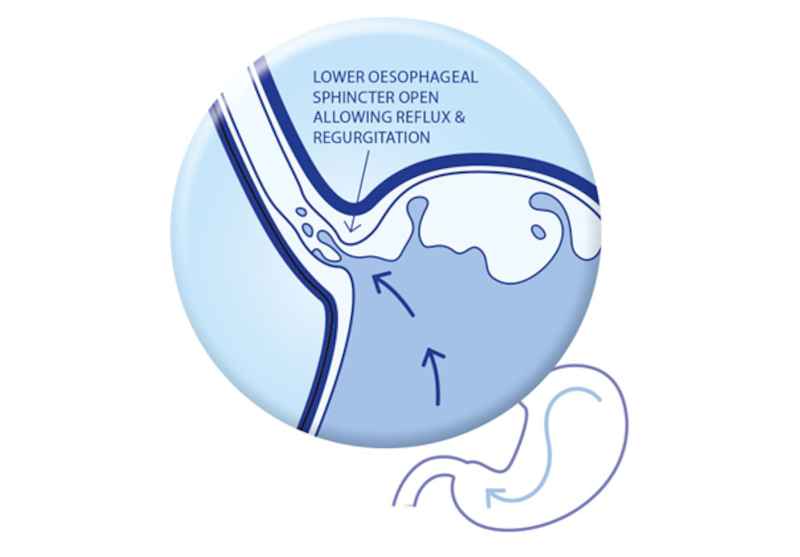
Reflux often occurs because the infant’s digestive system is still developing and the lower oesophageal sphincter has not fully formed.(2)
What are the symptoms of reflux?
Symptoms of reflux usually include:(3)
- Milk regurgitation
- Being sick during or shortly after feeding
- Coughing or hiccuping when feeding
- Unsettled while feeding
- Swallowing or gulping after feeding
- Crying and not settling
- Not gaining weight due to not keeping enough food down
What advice can pharmacy teams give?
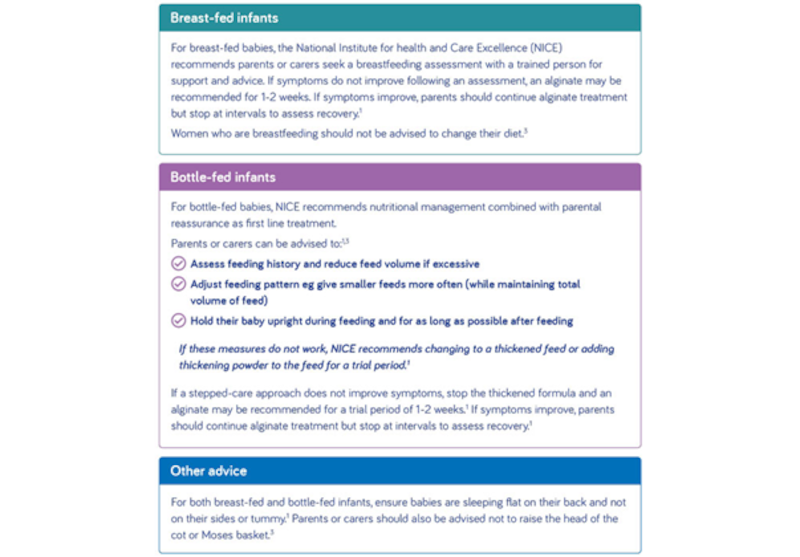
The pharmacy should seek to reassure parents that reflux does not usually require further investigation or treatment and will resolve spontaneously in 90% of cases.(1) By providing parents or carers with reassurance, up-to-date parental education and nutritional advice, pharmacy teams can optimise the management of reflux and reduce the unnecessary use of medications or dietary interventions.(1,4)
How should reflux be managed?
When to refer
Most infants with regurgitation do not develop complications.(1)
Parents or carers should be advised to seek further medical advice if:
- Regurgitation becomes projectile
- There is bile or blood present in vomit
- The infant is markedly distressed
- The infant has difficulty feeding or is failing to thrive
- If regurgitation or vomiting begin after six months old or continue after the first year of life
Infant regurgitation is frequently confused with gastro-oesophageal reflux disease, which is less prevalent, more serious and may require specialist referral.(1,3)