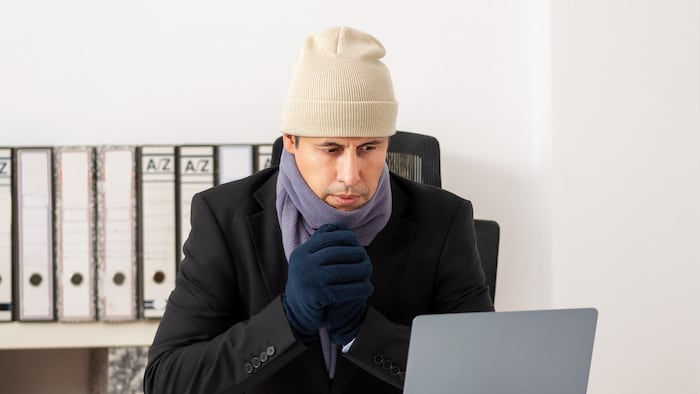
In an update from its latest regional committee meetings published last month (March 24), the PDA said that community pharmacists in the north had “shared their experiences of dispensing medicines wearing coats and gloves”.
This was “due to the reduced temperature in stores during the recent cold weather”, it added.
Read more: Eight in 10 employee pharmacists considered quitting in 2022
The committee discussed how employers “do not seem to want to pay for appropriate heating” and that temperatures are controlled remotely in some pharmacies “with no way to override this”, the update said.
It comes amid reports of an “April freeze”, with a return to colder weather at the start of this month and the potential for snow in parts of the UK.
“12 degrees”
Speaking exclusively to C+D last week (March 30), PDA regional committee member for the north Jayesh Ladva said that he had received reports of pharmacists working in temperatures deemed unfit to work in.
Mr Ladva, who is also a national executive committee member, told C+D that the PDA has had “several members from various employers bring it to our attention that it's too cold in the workplace”, saying they are having to wear “hats, coats and gloves”.
Read more: Feeling the pinch: How funding cuts are leaving contractors out of pocket
“We’ve had pictures from colleagues in Wales wearing a hat, coat, gloves and a scarf, holding a thermometer [that said] 12 degrees,” he said.
Another pharmacist reported being “advised to carry a hot water bottle”, he added.
“If it’s so cold that you can’t work without gloves then something is seriously wrong,” PDA director Paul Day told C+D.
“Months without heating”
Mr Ladva told C+D that in some pharmacies, the heating “hasn’t been working for years” while in others the heating is “controlled by head office so colleagues don’t have the ability” to turn it up or down.
He said that the problem is widespread and happens “across the board”, in both multiples and independents.
“There have also been reports where colleagues have been waiting for four months for broken systems to be repaired – four months without heating,” he added.
“Distracting” and unprofessional
And he said that pharmacists are not only concerned about the discomfort of working in cold temperatures but also how they can work effectively with patients.
“Trying to work with a jacket on with your hat and scarf is quite distracting. It doesn’t look professional to the customers as well,” he told C+D.
Read more: Mark Pitt appointed PDA Union general secretary after John Murphy retires
“It’s the pharmacists and the colleagues and obviously the patients visiting that suffer in these instances,” he added.
Temperatures in community pharmacies have been an ongoing issue, with the PDA taking to Twitter to raise awareness in December, but Mr Ladva said that incidents are on the rise.
Read more: Government to cut pharmacy energy bills from October, BEIS confirms
He told C+D that the issue “has been brought to our attention more this year”, possibly due to the cost of living crisis and rising energy bills for businesses.
And he added that reports have come “predominantly” from the community pharmacy sector.
Government guidelines
According to government guidelines, the temperature in all indoor workplaces during working hours must be “reasonable”.
There are no legal limits, but the guidance suggests a minimum of 16ºC or 13ºC if employees are doing physical work.
Mr Ladva said that 16 degrees in a pharmacy “should be absolutely minimum”.
Read more: Winterproof your pharmacy – part 1
“By law, employers must carry out health and safety risk assessments, especially for women of childbearing age, including anyone who's pregnant, breastfeeding, or have just had a baby,” he added.
Any “temperature fluctuations” or “extreme temperatures” affect them, as well as those with health conditions or disabilities, he said.
Read more: Winterproof your pharmacy – part 2
And Mr Ladva stressed that temperatures in pharmacies can also be problematic during summer months, with heatwaves pushing workplace temperatures to the other extreme.
This affects not only staff, but also the “safe storage and stability of medications”, he said.