Like in any other industry, many community pharmacists do a lot outside of their long days behind the counter. C+D has reported on pharmacists that have also become Channel 4-commissioned comedians, Premier League football scouts, beauty pageant winners, taekwondo world champions and a crime authors with BBC One TV adaptations.
But for Bedminster Pharmacy lead pharmacist Ade Williams, his passion - outside of medicine - lies in Bristol’s strong heritage of graffiti and street art.
“I remember once at 3am, one of my patients came out and saw me spray paint,” Williams tells C+D. “I go ‘it’s fine’, but he still comes in here with this look in his eye every time!”
Read more: ‘Humbled’ and ‘honoured’: Three pharmacists honoured in Black History Month
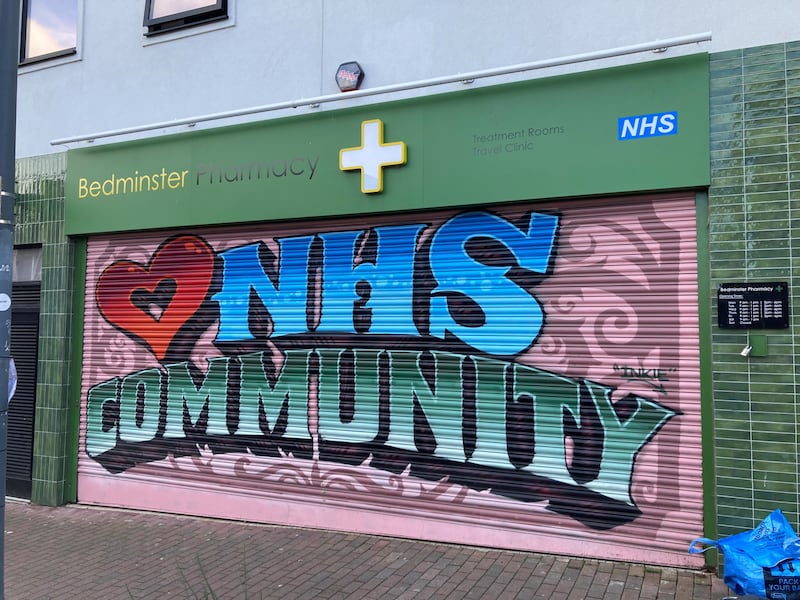
This love for street art led Williams to commission local legend Inkie for a mural on Bedminster Pharmacy’s shutters last year, when the pharmacy relocated across to its new premises on East Street.
The Bedminster area is home to Europe’s largest street art festival, Upfest, and Williams previously chaired the Bedminster Business Improvement District that sponsors it.
He told C+D last year that the mural, which reads “NHS Community”, represents “a constant reminder that community pharmacy is part of the NHS and they serve a very important role in that community” - and this message is a key part of Williams’ approach to running Bedminster Pharmacy.
Coal and cigs
A short walk from the local train station in South Bristol, the journey to the pharmacy reveals the changing face of the suburb. Large university accommodations tower over the area, and East Street, looking a little run-down, stands in contrast to nearby North Street.
The latter is now one of the more desirable places to live in Bristol, home to independent shops and cheaper house prices compared than its northern neighbour Clifton.
“East Street for a long time was very much a working social hub, and now it’s transforming,” Williams says.
He adds that the “tension” is felt particularly keenly by the older, white working-class locals who feel displaced amid the backdrop of cafes and vegan restaurants opening to attract new people to the area.
Read more: Three pharmacists recognised in Queen’s New Year Honours list
Bedminster’s heritage has been working class for many generations of Bemmies, with a large coal miner community in the 20th century, followed by locals employed in the nearby Tobacco Factory (now an established cultural venue).
Over 40% of the local workforce were employed in its factories during its peak years from the early 1910s up to the 1970s.
“Historically, some of the population here always had the worst health outcomes, because they used to get paid with cigarettes,” Williams says.
Location
Bedminster, Bristol
Hours open per week
44
Items dispensed on average per month
6,000
Breaking barriers
Given the social tensions play in Bedminster, Williams is conscious of making his pharmacy feel welcoming for everyone.
“It’s a big responsibility,” he says. “If you start to vie towards the attractiveness and ease of providing private services, that’s great in one sense because those patients are more than happy to pay for it. But what about those patients that just want good NHS care because they cannot afford that?”
The pharmacy’s dedication to providing accessible healthcare has seen it involved in pregnancy advisory service pilots, pancreatic cancer campaigns, supplying free period products to charities and even taking people’s blood pressure in the local pubs – a brainwave by one of his trainees.
“We started going in and we were very surprised,” he says. “People would say ‘what are you doing here? You sneaking one in!?’
Read more: Graffiti artist decorates new Bristol pharmacy
“But they would come back and say ‘can I have a chat with you? I’ve got this.’ All of a sudden, you’ve broken the barrier. Those interventions meant people saw us as a place where it was okay for them to come in.”
Bedminster Pharmacy has just completed a pilot for an endoscopy pathway to help patients prepare for the procedure and give counselling, and Williams believes community pharmacy’s involvement in this area will grow more as neighbourhood health models are established.
“That sort of localisation we’re going to see a lot more of, and devolution. It’s a key opportunity for us to work in the local community.”
Williams is pushing to get involved in a community chemotherapy pilot, too.
Read more: ‘Pioneer’ Bedminster pharmacist awarded honorary doctorate
“We know that where people receive care locally, it means that they carry on engaging with the treatments that they have,” he says.
“It’s hard work to keep trying to break in.”
“We know that it also means that for community pharmacy, especially because the evidence is now showing that we have a role, that the more other clinicians interact with us, the less they are intrigued by our clinical scope because we are part of the normal day-to-day conversations.
“It becomes very organic, that growth. It’s hard work to keep trying to break in.”
“Starts to wear you down”
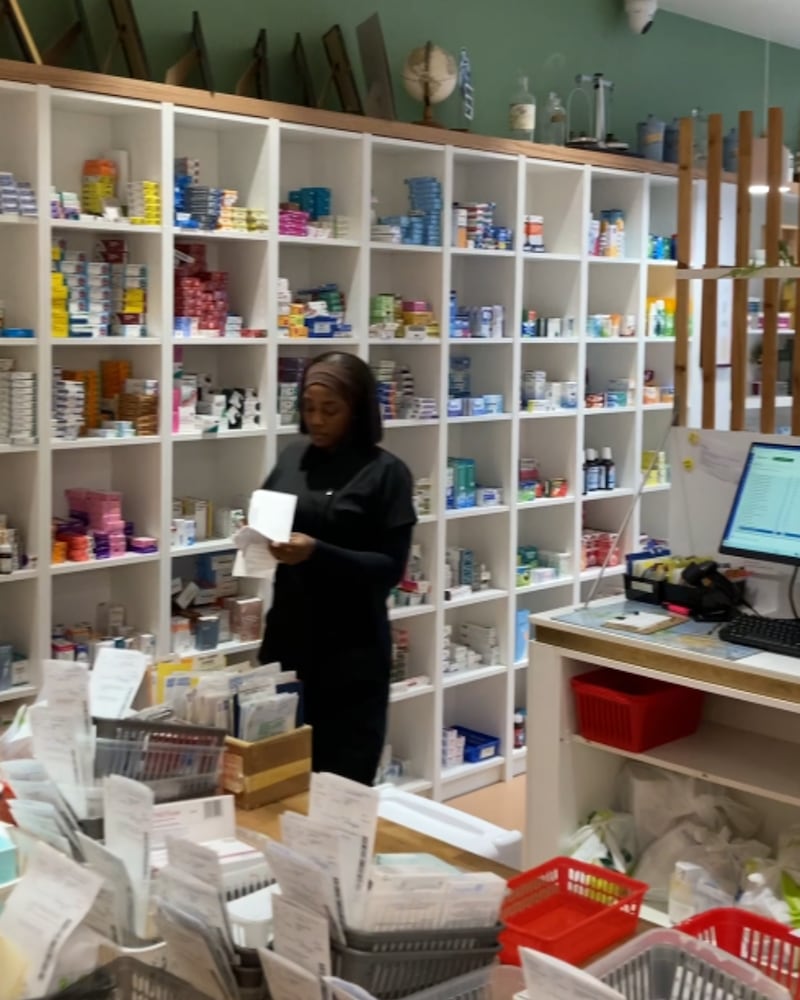
Pharmacy’s shift to clinical is evident in Bedminster Pharmacy’s new premises. Compared to its previous location, the pharmacy now has three consultation rooms instead of one, and much more limited retail choice on offer.
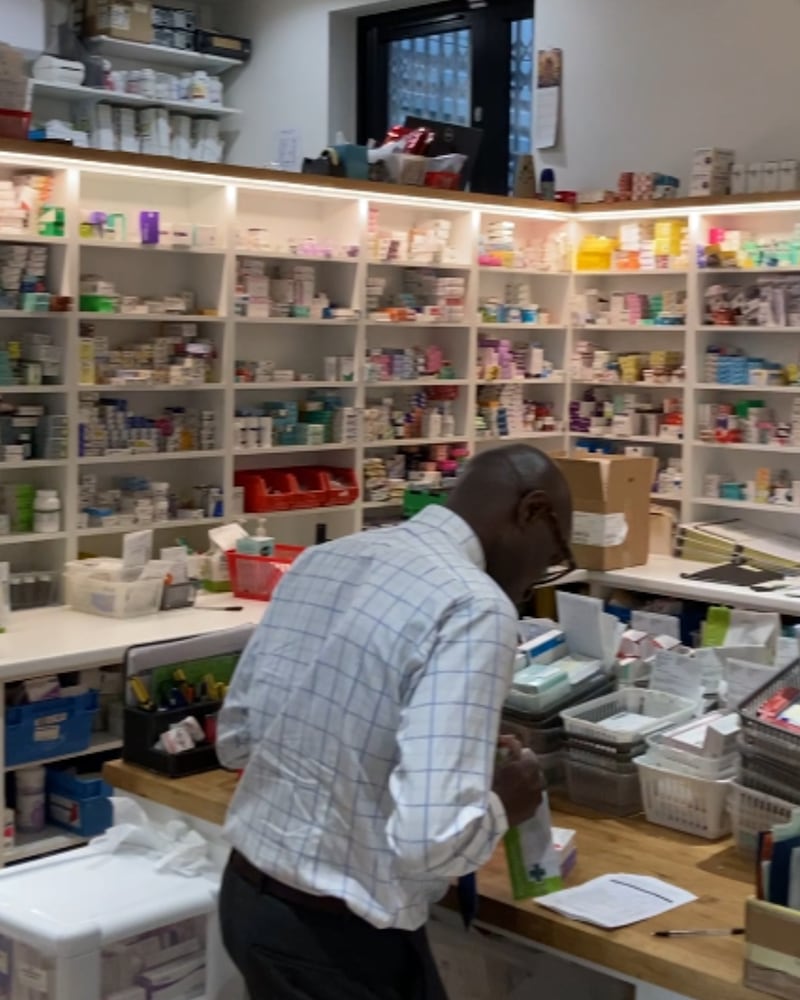
The natural light coming through the store’s big windows illuminates the pharmacy’s shelves which, along with medicines, display the historical pharmacy artefacts Williams has collected, as well as a cabinet showcasing the pharmacy’s awards - including a few of over half a dozen C+D Awards earned in the last decade.
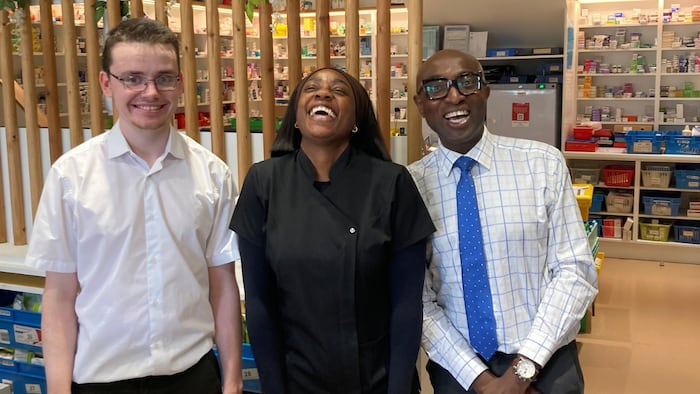
The pharmacy dispenses around 6,000 NHS items and delivers over 200 NHS consultations a month. There’s a team of five, including a delivery driver, trainee dispenser, pharmacy technician and a trainee pharmacy technician working alongside Williams.
But he stresses that the NHS and the sector need to work together so the services pharmacies offer are sustainable and don’t leave the workforce burnt out.
Read more: Pharmacy minister gets flu jab on ‘first visit’ to community pharmacy
“The biggest challenge is making sure our whole team continue to feel valuable to the health system,” Williams says. “It’s easier as a pharmacist now there’s prescribing, but our pharmacy technicians are the anchor of all that we do. How do they know that they are?”
Williams tries to remove the hierarchy of roles in the pharmacy so that patients are used to speaking to all staff members, not just the pharmacist, when they have queries. But he says it is “tiring” to have to keep making the case for the sector’s potential.
“I spent a lot of my career making the case for pharmacy, and you think ‘why don’t we design better?’,” he says. “Most things are already constructed and then we try to find a way to put pharmacy into it. It’s a sort of retrospective appreciation.
Read more: Community pharmacist among five new GPhC council members
“It really starts to wear you down because the patient demand increases and the system sometimes is very convoluted and inflexible. You end up in the space where you’re not doing as much good as you want to do. We need changes to happen quicker.”
“We need to be appreciated”
Asked whether the goverment is acting in the best interest of the sector - and has a clear plan for its role - Williams says pharmacy is in both “the best and the worst of times”.
“Post-pandemic, there was a real sense that community pharmacy is an anchor organisation, and the pace of private services shows people we can do this,” he adds. “But the worst of times is always the finances. We need to be appreciated; community pharmacy delivers more value than what it’s funded to do.
Read more: Pharmacist Ade Williams photographed by Rankin in NHS England campaign
“We need to really map clearly defined things: population health management, prevention, long-term health outcomes, addressing health inequity.
“Looking at any of those things, you need to get pharmacies on the table. People appreciate pharmacy for different things, but on the whole, we are not appreciated for our defined value.”
One of Williams’ worries is the erosion of trust between patients and pharmacists when medicines are unavailable due to shortages. But he’s optimistic that new legislation of substitutions would help mitigate this.
Read more: ‘We must protect the heart of our profession’: A love letter to community pharmacy
“It’s a broken system, and I welcome the ability to amend prescriptions,” he says. “It makes me feel I have something to offer the patient, because I can’t keep apologising.
“It’s the trigger for when the patient becomes rude, racist or abusive. There’s got to be a very pragmatic solution because it’s not a pharmacy problem, it’s more a UK problem now.”
“My message of safety doesn’t cut it with them anymore.”
Read more: In consultation with C+D’s Community Pharmacist of 2017
In one of the many roles Williams holds outside of his job at Bedminster Pharmacy, he is a General Pharmaceutical Council (GPhC) member, where he enjoys working with the lay members to share what’s going on the sector.
While Williams feels the GPhC is working hard to keep a handle on the proliferation of private weight loss services, he says a tipping point has been reached when it comes to patient safety.
Read more: ‘How I managed my team of leaders to outperform the competition’
“One of the things we are having to tackle is, for the first time with medicines, that patients are less worried about safety and more worried about access and costs,” he explains. “If I am not the solution for them but somebody across the road says they can meet that need, my message of safety doesn’t cut it with them anymore.
“Maybe for the first time we are in this space, having been used to the NHS offer of universal access and no cost at the point of care. The patients more likely to be accessing because of a desire for low cost on the wrong routes may be the ones that are already socially disadvantaged anyway.
“That’s a new phase of inequity. Are we starting to create two doors?”
Consultation rooms
Three
Staff roles
5
Staff roles
- One pharmacist
- One trainee dispenser
- One pharmacy technician
- One trainee pharmacy technician
- One delivery driver
A “yes” man
Williams’ caring and generous approach to serving his patients was shaped by his upbringing as one of four children in a single-parent household.
Williams moved to the UK from Nigeria aged 15, and saw the burden of “not just survival, but also responsibility” on his mother. It taught him the value of going the extra mile for others.
“You can always help to make something better for somebody else, give a bit more, and you must create the capacity to do that,” he says. “The bit I most admire about the team here is they go out of their way, and many people don’t know what it costs for them to do it.”
Williams is no stranger to going beyond what is required, having committed to a plethora of roles outside of his day job.
Read more: Behind the counter: Wellington Pharmacy, Somerset
He has non-executive and trustee roles across a number of healthcare and community organisations, including Bath and North East Somerset, Swindon and Wiltshire integrated care board, North Bristol NHS Trust, the Self Care Forum Charity, the Bristol Cathedral Council and the nearby Factory Foundation, which provides grants for creative projects in South Bristol.
While he might be guilty of saying “yes” a lot, he’s learned the benefits of bringing in people into these roles with him.
“I want to help put other people who are better than me [forward], and there are very few good things I see myself as being good at or the best at,” he says. “I’m always conscious that I can think of somebody else who can do this better.”
He recalls one of his former trainees joining the board of a local theatre group, even though he had been asked to join first, because she had studied drama.
Read more: Behind the counter: Penclawdd Pharmacy, Wales
“It means things are newer, the ideas are better, otherwise you start to have a great sense of your own self-importance,” he adds.
Williams is self-effacing, but the recognition he has received during his career speaks for itself.
He has honorary doctorates from the University of Portsmouth and the University of West of England, has received an MBE for “services to the NHS and to the community in south Bristol, particularly during Covid”, and even had the honour of being snapped by acclaimed photographer Rankin for his Covid response.
“You can always help to make something better for somebody else.”
Read more: Behind the counter: Charles Michie’s Pharmacy, Aberdeen
And just last month, he was recognised in this year’s Honouring Black Britain campaign for making the sector a “trusted and accessible place for healthcare”.
“I’m honoured to be a part of this community, because you go out and see there are not many people that would look like me,” he says.
“For many of them, I’m a bit of a nuisance, always going on about your health. I’m enthusiastic about your flu vaccination, conscious about your cardiovascular health.
Read more: Behind the counter: Pharmacy+Health, Harrogate
“But it speaks to me of a real British value that we’ve always welcomed people into our communities. It’s a reminder that in a very polarised world, the history of our country has always been about people who are welcoming and tolerant.”
While he regrets the lack of time he has had recently to commit to painting and street art, he’s pleased with how his pharmacy is tackling health inequities at the coalface.
“Hopefully, what Bedminster Pharmacy demonstrates to people is that to do good things, you can be small, but you need a big heart.”