
What impact is the chilly funding situation having on the day to day operations of a community pharmacy? And is the sector evolving to stay in business in a sustainable way?
Our coverage of C+D’s Counter View 25 survey starts with your thoughts on the state of NHS funding for community pharmacy - and satisfaction is elusive.
“Dispensing is still the core of community pharmacy, so funding should be based around this, like how it used to be,” said one respondent.
“Instead we are jumping through hoops for the Pharmacy Quality Scheme which we often do not have time or human capacity for. Moving away from funding centred around dispensing would be a huge mistake and take us a massive step closer to dispensing being done in large warehouses by large conglomerates like Amazon.”
Read more: Pharmacy retained margin funding £120m less than decade ago
Another respondent said “you can fill the hole with other funding streams, but a functioning pharmacy still relies on this money for day to day running. You can’t dispense 8,000 items a month for less than £10,000 without making some cuts to the service.”
Close the doors
Another said the industry “needs more funding, full stop” and called for strike-like action.
“A complete week of inaction apart from essential services,” they suggested. “Closed doors, only dispense and supply prescriptions. Pharmacy by appointment only. Understand the critical role of pharmacies.”
This sentiment was echoed by a separate respondent, who said “it feels as if funding levels have been set at a level to purposefully ensure the destruction of community pharmacy.
Read more: Pharmacy chain accuses CPE of ‘ignoring’ economic review
“In particular, the reimbursement arrangements for the supply of medicines is a huge concern. I therefore don’t feel the response should be to withdraw from Pharmacy First services, that misses the point. We should respond by withdrawing from or partially withdrawing from supply of medicines.”
Rubbish
It’s not as if pharmacy has kept quiet about the struggles it’s facing, said another. “I have written to the bodies and my MP about this years ago - and only recently, until the near collapse of Jhoots 60 pharmacies, has there been attention. There are some parallels to the Oxford rubbish dump by the river - years of growing problems and then this big one takes us all by surprise.”
As services surge into community pharmacy, led by the flagship Pharmacy First group of conditions pharmacies can treat, this has created its own issues, say some.
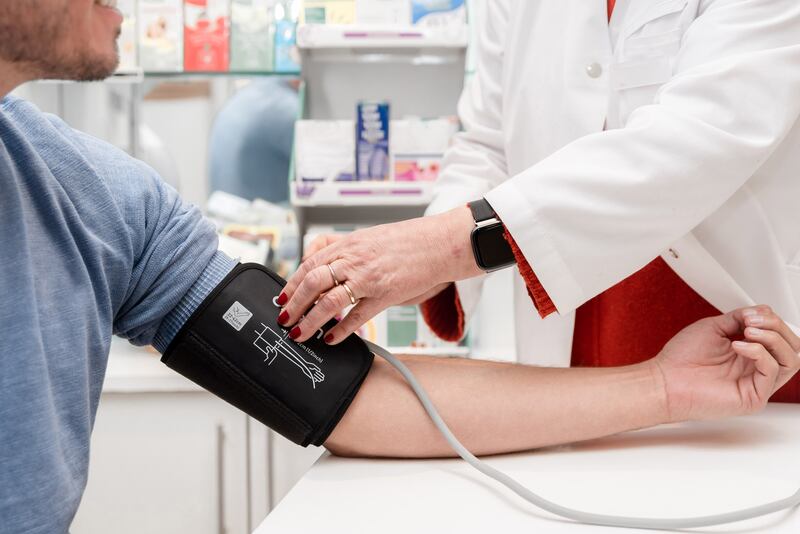
“Topping up this [dispensing] deficit with revenue from Pharmacy First means an approach is taken where consultations and records are top priority, not patient care,” said one. “You need to complete five blood pressure checks per day and five Pharmacy First consultations just to keep even on the dispensing side of the business.”
Though long-standing issues also remain. “Discrepancies between what pharmacy pays for drugs and what NHS pay for dispensing them,” said one respondent. “Losing money on almost every script dispensed.”
Targets
The creep of US-style pharmacy incentives in the shape of targets is also hovering ominously.
“Service driven revenue streams are just leading to inappropriate referrals and provisions, and lately there are constant exchanges relating to prescription queries that were previously seen as trivial,” said one pharmacist. “Everyone needs a branded prescription, or items cannot be sourced at tariff prices.”
Read more: Govt proposes regulation changes for ‘fairer’ pharmacy payback
“Pharmacy First funding is ridiculous,” said another pharmacist. “The threshold payments for 20 and 30 clinical pathways is unfair. Some pharmacies that open seven days a week hit 30 each month. Small pharmacies with low footfall struggle. It also results in targeted setting.
“One week in December our area manager demanded all stores do 10 clinical pathways in one week ‘no ifs, not buts’. As a store, if we do not hit 30 a month we are seen as a failing store, and at a review, the store manager and I were graded as “approaching performing”. This is a dangerous road to go down.”
Hypertension
They went on to say that “in addition, the services that can take much longer than a clinical pathway, such as 4+ items on an urgent supply or a lengthy minor illness, are seen as being of less value.
“Our area manager never asks or bothers about anything other than clinical pathways because of the £500 and £1000 payments. This could mean pharmacists are less incentivised to spend time on the ‘less valuable’ services. I don’t do that, it’s all about the patient for me, but I’ve spent over 30 mins on the phone to a minor illness patient before and my area boss doesn’t care.

“I’m pleased the ABPM bundling did not go ahead when planned, as that is also a concern. I do ABPMs but I don’t chase them. It’d be easy to rush someone into the room, get a reading of over 140 due to rushing them, then do an ABPM.
Read more: DH launches pharmacy hypertension service media campaign
“Over 50% of my ABPMs come back as hypertension. I suspect some contractors have a lower percentage because you can get a higher initial BP by not following good practice, and that allows you to offer the ABPM.”
Finally, amid the frustration comes one especially frank suggestion that is brief, but accurate.
“Pharmacy ideally needs to move to a new funding model,” said the respondent. And there may be broad agreement with that.
Please add your thoughts on funding in the comments below...
