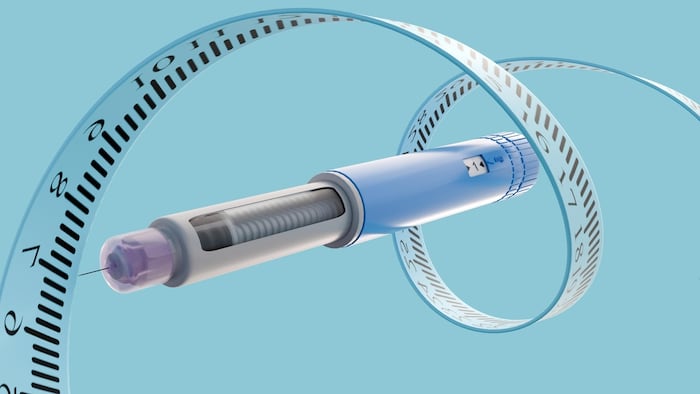
We all know that the UK has an obesity problem. The NHS spends an estimated £9bn per year treating obesity-related ill-health. Weight loss drugs play an important part in addressing the problem.
Even though most prescribing and supply of weight loss medicines is legitimate and professional, there are such large sums to be made that money is driving inappropriate behaviours at all levels of the pharmaceutical supply chain.
In addition to self-regulation of the pharmaceutical industry, there are laws that prohibit the supply of prescription-only medicines (POMs) without prescriptions and prohibit the advertising of POMs to the public. There are also advertising restrictions and professional standards.
Read more: Exclusive: GPhC takes first enforcement action over POM ads
These measures mean that different regulators are involved, each with a different set of powers:
- Self-regulation of the pharmaceutical industry is by the Association of the British Pharmaceutical Industry (ABPI)
- The Medicines and Healthcare products Regulatory Agency (MHRA) is an arm of the Department of Health and Social Care and enforces the law
- The Advertising Standards Authority (ASA) is another form of self-regulation. It has been set up by the advertising industry and does not have legal powers
- Professional standards are created and enforced by the General Pharmaceutical Council (GPhC) in Great Britain and the Pharmaceutical Society of Northern Ireland (PSNI). The GPhC and PSNI also have certain legal powers
Some examples of regulatory involvement are illuminating.
Novo and Voy
Last year, Novo Nordisk, the manufacturer of Wegovy and Saxenda which made an operating profit of about £14.6bn, was restored to ABPI membership after a two-year suspension following findings of numerous breaches of the ABPI code.
Less than a year ago, the MHRA raided a warehouse and seized unlicensed retatrutide and tirzepatide pens, and a few months ago, the regulator made its biggest ever seizure of unlicensed weight loss drugs.
The MHRA can also be involved in advertising cases when advertisement break the law. For example, it recently announced that Menwell Ltd (trading as Voy) had agreed to amend its marketing practices following an MHRA review of a sponsored social media advertisement.
Read more: Ads regulator raps Voy over Black Friday weight loss emails
Sometimes when advertisements break the law by promoting to the public weight loss medicines that are POMs, action is left to the ASA, which has also had run-ins with Voy.
One Voy advert showed a picture of a POM – a branded injection pen - and featured a banner that stated “Our extended offer is coming to an end: Expired”. A headline below stated “Last day to save Up to £70 OFF all plans”.
The ASA ruled that the advert breached its rules and ordered Voy not to promote POMs to the public in future, as well as ensure their future advertising did not create an undue sense of urgency for consumers considering medicated weight loss programmes.
Although the first part of this ruling was something the MHRA could have addressed, the ruling about an undue sense of urgency was a not legal issue that the MHRA could have dealt with.
PharmacyOnline.co.uk
The GPhC has powers to deal with breaches of its standards. In a case recently reported by C+D, the ASA notified the GPhC that it had issued two rulings about failures to comply with requirements relating to the advertising and promotion of medicines involving Express Healthcare Limited (trading as PharmacyOnline.co.uk).
Earlier this year, Express Healthcare had paid for a Meta advert that stated “If you’ve spent years watching your weight go up and down, then our weight loss programme could be for you”.
The advert clicked through to a webpage that said “View treatments” which in turn went through to a landing page headed “Weight loss injections”, with an image of a Mounjaro weight-loss pen, and it listed the treatments “Mounjaro Injections” (tirzepatide), “Wegovy Injections” (semaglutide), “Saxendra Injections” (liraglutide) and “Nevolat Injections” (liraglutide). All were POMs.
In addition to the advert, the Express Healthcare website contained a banner across the top that stated “Use code: W20 for £20 off Wegovy Consultations”.
Read more: Two arrested in MHRA’s ‘largest ever’ illegal weight loss drugs bust
Express Healthcare did not respond to the ASA’s enquires. The ASA ruled that the advert must not appear again in the form investigated and told Express Healthcare not to promote POMs to the public in future.
However, the ASA does not have legal powers and, despite having expressed concern, the MHRA does not itself appear to have taken action.
Before this decision, the ASA had made a similar decision in which it expressed concern about Express Healthcare’s “lack of response and apparent disregard” for the ASA advertising code.
At the pharmacy’s last inspection in January 2026, the pharmacy had been issued with an improvement action plan as it offered discount codes for prescription-only medicines which was inconsistent with MHRA guidance and the UK Code of Non-broadcast Advertising and Direct & Promotional Marketing (CAP Code).
Read more: MHRA busts ‘first’ UK illicit weight loss jab factory in record raid
On August 18, the GPhC exercised legal powers to issue Express Healthcare with an improvement notice. Among other things, the company was required to ensure that all current and future online content relating to the pharmacy complies with relevant legal and regulatory requirements including medicines legislation, the CAP Code, MHRA guidance and GPhC standards.
Failure to comply with an improvement notice may be an offence and, in addition, the GPhC registrar may remove the pharmacy premises from the register.
The Express Healthcare case shows how a gap in legal powers can partly be filled through co-ordinated action by regulators. However, this case and other cases suggest that enforcement measures are not always effective and that regulators may lack the resources to enforce the law.
David Reissner is chair of the Pharmacy Law & Ethics Association