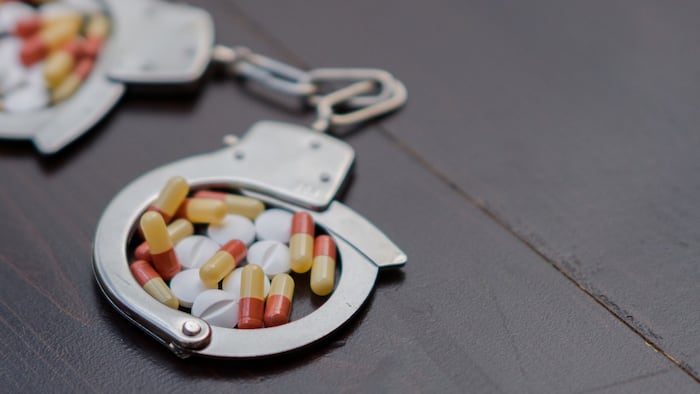
I don’t want to upset you, but many of you reading this are criminals – serial offenders. The good news is that you are more Robin Hood than Brinks Matt robber, and you won’t be prosecuted.
I’m talking about the home delivery of medicines. Since 1933, it has been a criminal offence to sell or supply Pharmacy medicines (P-meds) and prescription-only medicines (POMs) except on registered pharmacy premises.
The law is currently in regulation 220 of the Human Medicines Regulations 2012. The maximum penalty for each offence is an unlimited fine in the Magistrates’ Court and up to two years’ imprisonment in the Crown Court.
Read more: Contract negotiations: CPE and Kinnock meeting minutes revealed
I haven’t spoken out about this before because home deliveries are essential for some patients and welcomed by everyone who benefits from them – including me.
I’m not sure that successive governments have realised that home deliveries are illegal and governments wouldn’t want to risk the unpopularity of enforcing the law.
Regulators like the General Pharmaceutical Council would almost certainly regard enforcement as disproportionate.
Indeed, in 2005, the then government seemed to have overlooked the requirement for supply on pharmacy premises when it amended the market entry regulations in England to allow the grant of NHS contracts to distance selling pharmacies without having to show that it was necessary or expedient to include these pharmacies in an NHS pharmaceutical list to meet a need in the area.
It’s safe for me to blow the whistle now because the law is about to be changed.
Read more: All the headlines from the government’s NHS 10-year plan
From October 1 2025, the regulations that will amend the Medicines Act 1968 and the Human Medicines Regulations 2012 to allow all pharmacies to use hub and spoke arrangements will also amend regulation 220 of the Human Medicines Regulations by changing the words “on premises that are a registered pharmacy” to “at or from premises that are a registered pharmacy”.
This amendment will not only make home deliveries legal, but will also lay to rest any doubts about the lawfulness of putting medicines in automated collection machines that are not on pharmacy premises.
Coincidentally, the change is consistent with the recently published NHS 10-year health plan for England which gives the impression that its authors do not know that many pharmacies deliver medicines to people’s homes, and says: “We now get many of life’s essentials delivered straight to our home. Medicines should not be an exception.”
Perhaps this is a recognition that the NHS should pay for home deliveries. We can only hope so.
Read more: Pharmacies to deliver HPV catch-up jabs from next year
The same regulations that will amend the law to allow universal hub and spoke dispensing will also take the opportunity to rectify another anomaly in the law.
It is common in pharmacy circles to talk about General Sale List medicines or GSL medicines. Indeed, the Medicines Act 1968 - which sets out the legal duties of responsible pharmacists and superintendent pharmacists - refers to POMs, P-meds, and medicines on a general sale list.
The problem is that the general sale list is historic and nothing has been added to it for a quarter of a century.
Read more: Make oral emergency contraception a GSL med, sexual health leaders urge
In the last 25 years, the classification of medicines has been determined by their marketing authorisation, and medicines that can safely be supplied elsewhere than pharmacies are designated as “subject to general sale”.
This has led to a gap in professional regulation that has been overlooked. However, the gap will be filled by a change in the law on October 1 when the Medicines Act and the Human Medicines Regulations are amended.
So unless you were looking for a reason not to provide a home delivery service, you can heave a sigh of relief, keep calm, and carry on delivering.
David Reissner is chair of the Pharmacy Law & Ethics Association