Early internet idealists hoped that it would be based on everyone giving and taking freely.
Initially, much of the internet, including Harry Potter fan mail and Wikipedia, was used to train large language models (LLMs). Creatives, including writers, are up in arms over the breach of their copyright; even my tiny contribution is in the (‘pirated’) database LibGen, used for AI training.
Digitalisation of ancient texts, including Sanskrit and 3,500 of the global dissertations from across disciplines from 1498 – 1884 in the Bodleian Library, University of Oxford, are presently contributing. The Webb Space Telescope is providing a fire hose of images.
Fei-Fei Li, the ‘Godmother of AI’, urges the importance of more visual input. True intelligence, whether artificial or human, also requires bodily understanding: what it means to inhabit a body. In 1974, philosopher Thomas Nagel in ‘What is it like to be a bat?’ argued that subjective experience is fundamental to consciousness and is beyond objective understanding.
Read more: Human extinction, pandemics, pharmacy and unicorns
AI is increasingly interacting with the physical world, such as in robotics and autonomous vehicles. AI’s understanding of the physical environment, including moment-by-moment experience such as (terrestrial) objects falling downwards under gravity and the laws of physics, is expected to continue to evolve rapidly.
Initially, LLMs merely responded to questions. Then their thought processes were shared: witness China’s Deep-Seek. AI can now use agents to autonomously choose websites, read them, and summarise findings. If prompted to take longer, AI (like humans) will ponder more deeply. AI can now identify potential drug molecules, synthesise them overnight in robotic wet laboratories (while human researchers sleep) and present findings and physical samples by dawn. Wow!
Read more: General practitioners and community pharmacists: the forever struggle?
But the prompt from a human remains crucial.
AI excels in scrutiny across varied fields, including dentistry, law, medicine and pharmacy. AI can be an astonishingly capable artist, diplomat, empathetic (‘talking cure’) therapist, musician, negotiator, translator, or (soulless!) sermon writer. Unlike humans, AI is rapidly improving.
So, what is left for humans?
Read more: What role will pharmacists play in the eternal pursuit of a longer life?
The path to professional registration in healthcare requires a deeper understanding of the physical world, encompassing fine motor skills, spatial awareness, and embodied cognition. These are essential for pharmacists, particularly in dispensing, conducting physical examinations and engaging in nuanced patient interactions.
For pharmacists, this is particularly inculcated during the year as a trainee pharmacist (previously pre-registration graduate). Similarly, in the UK, academic law examinations must be combined with a period of (human) qualifying work experience or pupillage for solicitors or barristers, respectively.
Interestingly, when Geoffrey Hinton, the ‘Godfather of AI’, was asked what degree subjects would be best for a young person, he did not know. However, he suggested that practical skills in confined spaces, such as those of a plumber, might be highly valued shortly.
Read more: Is community pharmacy truly ‘private’?
This raises intriguing questions about the future of pharmacy. Would more use of AI favour pharmacy technicians who excel in hands-on tasks, particularly in dispensing: handling the empirical medicines themselves, over pharmacists who have chosen to focus more on cognitive and direct patient clinical roles?
The General Pharmaceutical Council considers both pharmacists and pharmacy technicians to be health professionals. How would a pharmacy technician, partnering with an AI holding pharmaceutical knowledge, perform compared with a (more expensive) pharmacist choosing not to use AI?
Read more: The steady evolution of pharmacy technicians into the future
Given all this turbulence, what is left for pharmacists? Human pharmacists must still contribute critical thinking in problem-solving.
Open AI sources are democratic and potentially available to eight billion humans, including pharmacists, worldwide. Imagine taking an existing platform. Tweak it to help that pharmacist’s situation or interest. That may (presently) still need confidence in, say, programming using Python. Frontline practitioners, internationally, may soon seize groundbreaking innovations, plucking profitable, early-season low-hanging fruit. Innovators may reap substantial rewards, but also carry considerable risks.
Read more: Pharmacy’s predicament: a psychosocial perspective
But be careful. With such information and AI logic effortlessly available, we humans must not make ourselves stupid by being too lazy to think. The process of finding the answer yourself is part of human learning and understanding. Do not allow the machine to atrophy your mind.
Presumably, the humans, whether pharmacists or pharmacy technicians, will carry their own personal, professional liability indemnity insurance. The responsibility remains human.
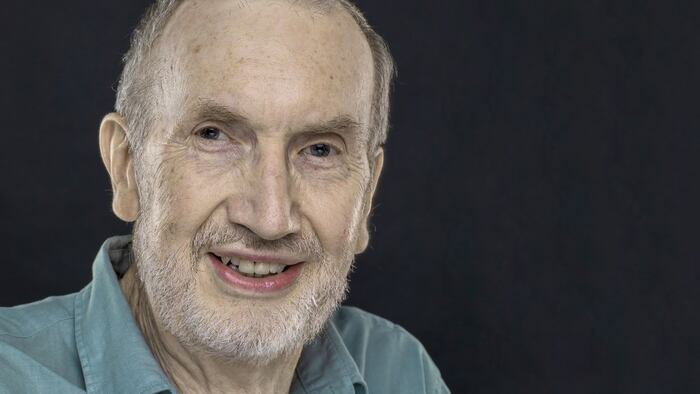
Dr Malcolm E. Brown is a retired community, hospital and industrial pharmacist, and is a sociologist and honorary careers mentor at the University of East Anglia.