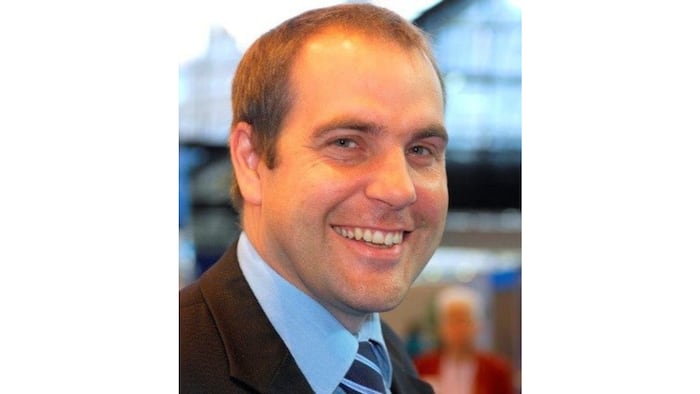
Being a past president of the Royal Pharmaceutical Society (RPS), a current member of its English Pharmacy Board and with over twenty years’ experience as a trustee of pharmacy-related charities, I feel duty-bound to raise my concerns about the proposed changes to the RPS.
They signify a fundamental shift in its structure and ethos, moving from a membership-elected, pharmacist-led organisation to a college substantially run by unelected individuals and non-pharmacists.
Read more: Royal college row: RPS hits back at critics as CPhOs say ‘vote yes’
This transformation will significantly alter the organisation’s role and priorities. Under the new model, the RPS will evolve into a charity focused on public benefit, rather than a learned Society that advocates primarily for the interests of pharmacists (which ultimately benefits the public).
I consider one of the most concerning aspects of the proposed changes is the removal of many of the safeguards currently in place under the RPS’s present charter. The new arrangements grant extensive authority to a trustee board.
This board, led by an appointed individual—extremely likely not to be a pharmacist—would have the power to set policy and regulations without input from the pharmacist membership.
Read more: ‘Resign immediately’: RPS royal college row heats up as vote looms
Under this new structure, it is possible for the trustee board to:
- Operate without a president,
- Remove elected members entirely,
- Have full control over RPS operations,
- Establish new associate membership categories that would have voting rights in everything except special resolutions.
There is no provision in the proposed charter that would prevent these outcomes from occurring. And imagine this scenario, with a trustee board for the Royal College of Pharmacy acting for the public interest…
Read more: RPS Society or College, as health professionals let’s continue with the (collegiate!) cooperation
The board could very legitimately, and possibly morally appropriately, write regulations having a lay majority of trustees and all of the people on the trustee board appointed. It’s possible it could deem elections an inappropriate way to select trustees acting in the interest of the public.
Additionally, the non-lay minority (pharmacy members) could be drawn from all of pharmacy – pharmacy technicians, pharmacist assistants, pharmacists, pharmaceutical scientists etc. – meaning it’s possible only two or three pharmacists would sit on a trustee board of thirteen.
In no one’s world could that be called a pharmacist-led organisation.
Read more: RPS board member resigns over royal college strategy
Another quirk of what is being proposed leaves those living in England or overseas considerably less chance of being elected onto the RPS Senate.
Based on the estimated number of RPS members living in each area and the proposed number of allocated seats, I estimate those in England and overseas would have a 1 in 5,800 chance compared to the more favourable 1 in 600 chance for those in Scotland and 1 in 400 chance for those in Wales.
I’m a Welshman and I like to see my country men and women given a good chance, but this appears very unfair on those living in England or overseas.
Read more: RPS announces bid to become ‘Royal College of Pharmacy’
For those who value the RPS’s role as a pharmacist-led organisation, a vote against the proposed changes is a vote to preserve an institution that prioritises the interests of pharmacists, and one that is led by pharmacists and elected by pharmacists.
Voting ‘No’ means advocating for an RPS that remains accountable to its members and dedicated to serving the public through the lens of the profession of pharmacy.
It is more than just a rejection of a new governance structure.
Read more: Martin Astbury elected as first RPS president
It is a stand for the values that have defined the RPS: leadership by pharmacists, representation of pharmacist interests, and a commitment to advancing the profession. It ensures that the RPS continues to be a voice for its members and remains grounded in the needs of the profession it serves.
If my ‘Vote no’ campaign fails, I will resign. But, if the ‘No’ votes prevail, I believe the senior leadership of the RPS should do the honourable thing and they should step down.
Martin Astbury is an RPS English Pharmacy Board member and a Morrisons Support Pharmacist. He writes here in his personal capacity and not on behalf of the RPS.