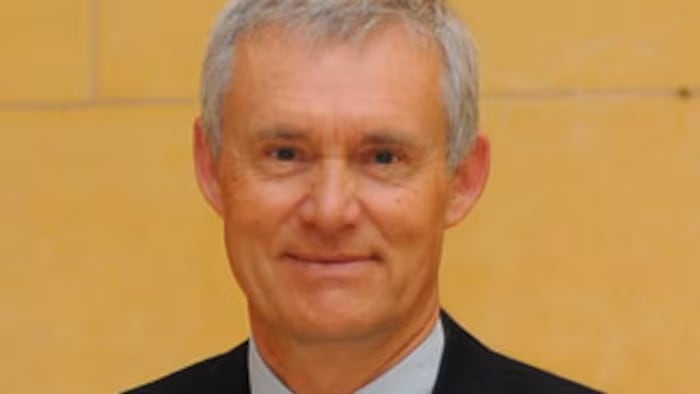
“It sort of just keeps the show on the road,” says Peter Cattee, who was part of CPE’s negotiating team, of the 2026/27 funding deal.
“Just enough so people think ‘I might scrape through like this’…”
Cattee is not being unsympathetic to those left disappointed by the latest funding deal, but after 45 years in the business, he is realistic.
“It’s there for all to see, isn’t it? The committee often reluctantly accepts the best offer it thinks it can achieve from the government, but the consequence has been that structural problems have been ignored.”
It’s a position community pharmacy has found itself in “over several years now,” he says. “We’ve been working under those circumstances for quite a long while, and the time has come to face some of these difficult issues and start to come up with solutions, rather than just managing or mismanaging them.”
Read more: ‘In it for the long haul’: Kinnock hails new pharmacy contract
CPE had a “long list” of these difficult issues, and despite a 10% uplift in funding the deal did not address core problems for many.
Including Cattee, who made a point of highlighting the importance of a commitment to reform by the government when the deal was announced.
However, shortly after the announcement, CPE said reform would be “challenging” and “no precise timeline” currently exists.
“In the past pharmacy hasn’t just asked for more money, it’s asked for other changes as well, and by and large those haven’t been facilitated either,” he says. “There is support for pharmacies in communities when they are closing, but little interest in addressing any of the structural problems which cause these closures in the first place”.
He cites Jeremy Hunt, who as secretary of state for health cut pharmacy funding but added his name to two petitions in 2023 which protested the closure of a Boots in his constituency.
“The ultimate irony,” he says. “You can’t underfund pharmacies forever, and then save them all”.
He then references the economic review released 15 months ago, which showed “quite starkly that the gap between what is necessary to support the existing contractor base now, and what it was 10 years ago. There just isn’t enough money to pay for 10,000 plus pharmacies that exist in England.”
Irrelevant
So is CPE, in particular its negotiating team, unfairly criticised? Cattee is careful with his words.
“I think the function of CPE is to gather the thoughts and wishes of contractors, and try to turn those into reality,” he says.
“It’s very difficult to do that when contractors want different things, and varying business models in the sector make that inevitable.
“But I don’t think pharmacy’s problem is CPE.
“The simple economics of this will make some of these questions just irrelevant,” he says. “Businesses cannot just sit there expecting to make a loss year after year after year, because we do know where that’s going to end”.
Cattee knows this as well as anyone in his role as chief executive of Peak, which announced a pre-tax loss of £8.6m in its latest annual accounts.
He is candid about the results and says, “we know three months into the year what’s going to happen, we’ve been doing this for a long while”.
Read more: ‘Financially secure’ Day Lewis sees pre-tax profits drop 150%
“Pharmacy has always been based on averages. I’ve never been totally fixated on transactions that make a loss, in any larger business there is ratio of transactions, positive and negative. Some negative ones are just inevitable.”
But he says if you look at the accounts of the “medium to large pharmacy groups, if the majority of them are not able to trade positively, then it seems to me we’re trying to operate in a system of averages where the average is actually below zero.
“It feels like what’s happening is that we’re all competing with each other to get a share of something which just isn’t large enough to support all of us anymore.
“If you look back over a really long period of pharmacy accounts for 20 years, there’s always been, every year, several companies that trade negatively.
“But the mean of the accounts of the larger pharmacy companies was always positive, and for the last three years now it’s been negative every year.”
Unusual
He attributes this to two things. Not enough “money” and “the incessant increase in primarily all costs”, especially “staffing costs”, which ends up putting “a threat over the whole system”.
“Not a day goes by” where Peak doesn’t “get pharmacies offered for sale to us, or other people in the same position as us”, he says.
“All the large pharmacy groups, without exception, now are deconsolidating, disposing of branches, which I think in the world of business is quite unusual in any sector.
“It seems to me that perhaps there’s an over-concentration of people just trading pharmacies rather than improving pharmacies and services, and that’s something obviously we’ve tried to do here.”
What Cattee is trying to do is outmanoeuvre rather than get sucked in and dragged down – and automation is his answer.
“We think it’s foolish to invest in premises. We could introduce more consultation rooms into our larger branches, but the capital expenditure to do that is quite large, and we don’t think the return makes sense when we’re losing money every year.”
Read more: GPhC hub and spoke review highlights areas for ‘improvement’
But he is investing in tech. “We’ve gone full automation”,” he says. “Built the hub”, “already had the spokes”, and the “internal volume to support the technology, we’ll always have enough work to put through it”.
He says it’s been running for “just over two years” and is “completely stable”.
“We’ve moved costs around into the business, where we’ve lost staffing costs in terms of assembly, and had a significant, significant increase in accuracy. We’ve done the proof of concept, built it, stabilised it, and it’s now settled down. It’s created a “really terrific working environment” and is “more professional” and “more robust”.
“It’s part of what the future of pharmacy needs to look like. It’s an automated assembly process that significantly reduces errors and introduces a calmness to the working environment, which just doesn’t exist to a large part in pharmacy.”
Burden
He’s not waving a magic technological wand, more moving towards an uncertain future progressively. Utilising emerging tech is not necessarily “an economic plan which is automatically going to bring such success” in itself he says, but as a contractor “for 45 years now” who started with “a single shop” he knows “the weight and the responsibility of doing everything for yourself”.
And though he has seen an array of “digital solutions and things like that” over the decades which help in various ways, he says “the burden doesn’t seem to get any easier or lighter, it changes”.
“If anything, I think you know it probably gets heavier in terms of the number of things you’re expected to do, and that’s because professional standards are improving staff welfare.
Read more: Legally, do you understand your position on Hub and Spoke?
“HR is a much, much bigger issue than it used to be. I’m not saying there aren’t improvements to be made with these things, but there aren’t that many economies of scale within the sector that are easily identified and bringing financial benefit, and again, I think the accounts of most pharmacy groups demonstrate that.”
One financial area he believes requires reform is the “really high-cost concession lines”.
“One of the things the government’s been rather unrealistic about is making us piggy in the middle between themselves and manufacturers,” he says.
“It’s very difficult for anyone to explain why a tariff price of something should be £1 and then go up to £100 because of shortages. I think the government has been a significant part of the problem, in as much as it’s placed pharmacy in the invidious position of having to deal with its cash flow.”
Read more: Third month of record drug price concessions
As an example, he says codeine linctus has hit around £30 a bottle, which throughout his career hovered around £1.50.
He says when these drug prices skyrocket some pharmacists “just don’t have the money” to buy the drugs even if “it’s going to go down in the drug tariff next month”.
“That’s the sort of structural issue we need to be talking about with the government”.
But he is the first to say there is a “long list” of issues to pore over, and by no means all of them are financial or structural.
Perception
They also include the patient’s perception of what a pharmacy can offer, and a collective effort to “try and re-educate more of our patients” to “to wean people off the urgency” of a typical visit would develop a “larger proportion of our customer base understanding the difficulties, and appreciating the value of what we’re doing.
“Listen, I compare it with going to a dentist or an optician, particularly a dentist. I go into a relaxed premises, I meet a professional, it’s not tense, it’s not rushed. I go to pharmacies, and it’s everything’s in a hurry, everything’s do it now, do it a minute ago.”
It’s a neat summation of the pressure building in community pharmacy over the years, which lit the touchpaper on a ballot for collective action 18 months ago. Recent calls from the IPA threated to reignite the issue. What does Cattee think?
Read more: ‘Strangulation, pushing, punching’ - damning CPE survey on abuse
He is clear on his personal belief that “every human being has a right to withdraw their labour if they believe that they’re being exploited, I believe that is a fundamental human right, but that’s just me…”
From a business perspective, however, he points out a fundamental flaw in any attempt at a strike by community pharmacy.
“I just don’t see how a commercial organisation can strike against the government,” he says. “I think when GPs do it, they do it more or less as single contractors, because they are the employee, but I just don’t think our contractual relationship is one that really facilitates a withdrawal of labour, so I just don’t see it.”
He also points out that many pharmacists might have a “terrible fear that nobody around them is going to strike” and that all they end up doing is making “a political point at their own economic expense, and undermining their own business with some of their patients, who will then find it more convenient to go to another pharmacy”.
Realistic
There are a lot of noisy issues in community pharmacy, but the overarching one for Cattee is that the government needs to have a firm plan for reform. And that is currently elusive.
“I would like the government to tell me and the profession what the pharmacy network is supposed to look like in five years, and what it’s meant to be doing,” he says, directly.
“This involves attaching some numbers to it, behind which budgets and realistic projections for funding in the future can be built.”
But he also worries that perhaps the government sees a network “which is not sufficiently focused, for perfectly understandable reasons, on the challenges of the future because it’s so busy firefighting the everyday difficulties of managing the inadequacy of the current situation.”
“All these problems, they’ve just been parked,” he says. “And some of them need to be dealt with now, and that’s really difficult. But that’s what’ll be at the heart of it.”
