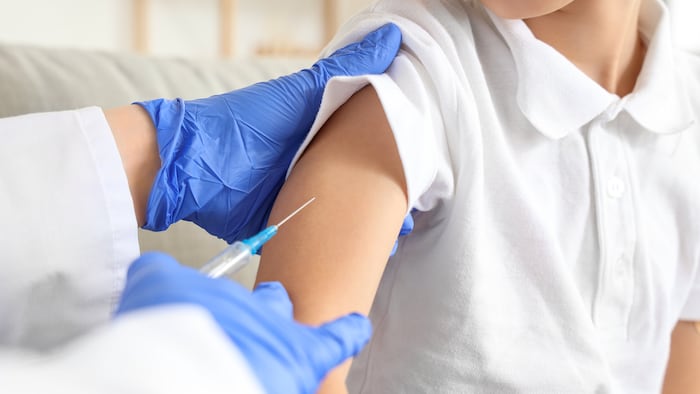
There will be more “outbreaks of preventable diseases” in the UK without reforms to “outdated” vaccination programmes for school-age children, the National Pharmacy Association (NPA) has warned.
The body today called on the NHS to “commission pharmacies to provide vaccines to school age children” in order to combat “a dangerous and growing wave of vaccine hesitancy”.
It warned that there could be “tragic consequences” if the declining level of vaccination among teenagers is not “urgently addressed”.
Read more: RSV maternal vaccine protects newborn babies, study finds
The NPA said pharmacies across the UK “have seen a huge surge in patients requesting private vaccinations for children” after the recent meningitis outbreak in Berkshire and in Kent, but vaccinations for school children are currently administered either in schools or by GPs.
Pharmacies are not able to contribute to this effort, it added, “despite already “delivering vaccinations to adults to protect against flu and Covid”.
Declining uptake
Analysis by the NPA found that there was no national childhood vaccination programme in the UK” that met the World Health Organisation’s benchmark for 95% uptake.
Uptake for the MenACWY vaccine “has fallen by 16%from its high point in 2018”, the body said, with a quarter of eligible Year 9 and 10 school pupils “missing out”.
Read more: Pharmacies to receive 20,000 meningitis jabs from NHS supply
It added that uptake for the Td/IPV vaccine for tetanus, diphtheria and polio has “fallen by 15% since 2018”, leaving “over a quarter of 14 to 16 year olds unprotected”.
Meanwhile, flu vaccinations among eligible school children have “plummeted” , the NPA noted - just 52% were vaccinated this year compared to 60% in 2018, with the figure falling to 43% for 15 to 16 year olds.
The NPA has urged the government to harness pharmacies to “provide urgent catch up vaccinations for free” to teenagers who missed their original vaccine, and to include pharmacies “in the rollout of vaccines for school children to ensure greater take up”.
Read more: Just 8% of women discuss maternal vaccines with a pharmacist
It also said the NHS should “use pharmacies to provide catch-up vaccines for patients over 11 who missed one or more of their childhood vaccinations”, adding that pharmacies are “trusted by patients and are also well-placed to tackle cultural challenges around vaccine hesitancy”.
And it highlighted that a YouGov poll commissioned by the NPA found that 55% of adults “wanted to see vaccination services for children offered in their pharmacies”.
Some 39% of respondents said they found their GP difficult to access, compared to just 6% for pharmacies, it added.
“Pharmacies stand ready”
NPA chair Olivier Picard said “falling rates of childhood vaccination represent a significant public health challenge and could have tragic consequences if not addressed”.
He added that there must be “reform to an outdated childhood vaccination programme which recent evidence suggests has seen declining levels of uptake” - and that “pharmacies stand ready and able to support the NHS”.
“It makes sense for pharmacies, who are highly accessible and on people’s doorsteps, to be able to help NHS colleagues deliver vaccinations,” he continued.
“We must do all we can to stop the clock being turned back on efforts to eradicate serious childhood diseases.”
Read more: Asda Pharmacy slashes MenB vaccine price
It comes after the CCA in March urged the Health and Social Care Committee to “harness” community pharmacies to improve vaccine uptake.
The CCA said there was an “opportunity” to “drive vaccine coverage and uptake, especially amongst underserved communities”.
Read more: Plans for ICBs to commission vaccines delayed by a year
And it follows a review of the RSV vaccine pharmacy pilot concluding that the “current evidence does not show that this model improved overall vaccine coverage”.
The report did acknowledge that the results of the pilot were impacted by several factors, including “the lack of direct comparative data with general practice, limited reach among under-represented groups, and the highly supported environment in which the pilot was delivered”.
