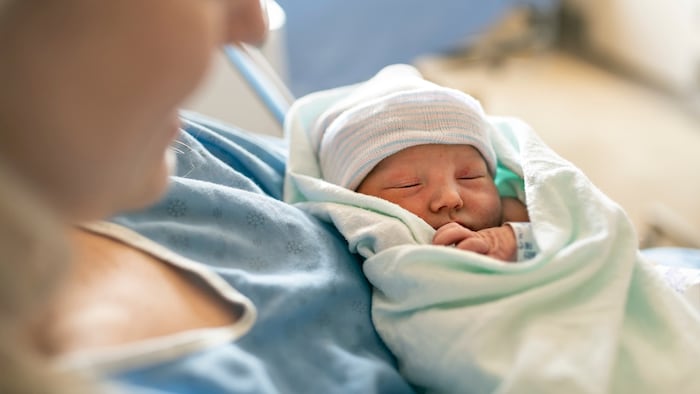
The number of infants aged below six months being admitted to intensive care or higher dependency units due to Respiratory Syncytial Virus (RSV) has dropped by over 50% in the first full year of the maternal vaccine programme.
Rolled out in September 2024, the vaccine programme is offered to women from week 28 of pregnancy and provides “over 80% protection to the new-born infant against hospital admission” from RSV.
Read more: RSV maternal vaccine protects newborn babies, study finds
The UK Health Security Agency’s (UKHSA) surveilled 20 NHS Trusts who reported 131 infant hopsitalisations due to the virus in 2024-2025. Following the programme’s rollout, this figure dropped to 63 in 2025-26, something which the NHS said, “demonstrates the strong impact that the first full year of the maternal programme has had”.
Previous RSV seasons, typically running from October to March, have seen “well over 1,000 babies a week” taken into A&E for bronchiolitis, a condition primarily caused by the virus. However, since the maternal vaccine programme, “peak weekly infant bronchiolitis A&E attendances in England were lower than previous seasons, and the peak season was shorter”.
Ten days before birth
The UKHSA also found that “from March 2025 to February 2026, 61.7% of women giving birth had received an RSV vaccine”.
Immunisation consultant at the UK Health Security Agency Dr Conall Watson called the vaccine “highly effective” with an “excellent safety profile”.
Read more: RSV vaccine programme expanded to more vulnerable adults
He said, “You should be offered the vaccine by the NHS, but if you are past 28 weeks pregnancy and haven’t yet had it there is still time – it can help protect when given as little as ten days before birth, though longer is definitely better.”
“Late summer and autumn babies are at highest risk from RSV”, he added, urging expectant mothers to contact their GP practice or maternity service to arrange a vaccination.
Read more: No improvement on coverage, says RSV vaccine pharmacy pilot review
Community pharmacies have a growing role in administering RSV vaccinations.
Last April, the Department of Health and Social Care (DH) announced plans to increase the number of community pharmacies offering the RSV vaccine in 2025/26 and in February this year, NHS England launched a national RSV campaign to “support uptake of the vaccine”, part of which directed patients to community pharmacies “commissioned” to deliver the vaccination.
Read more: Govt accepts advice to expand RSV vaccine eligibility
The UKHSA findings come after eligibility for the vaccine was expanded to include adults aged 65 to 74 and with chronic respiratory conditions or a suppressed immune system from September.
It also follows the expansion of RSV vaccine eligibility to adults aged 80 and over and residents in elderly care homes from April 1 this year.