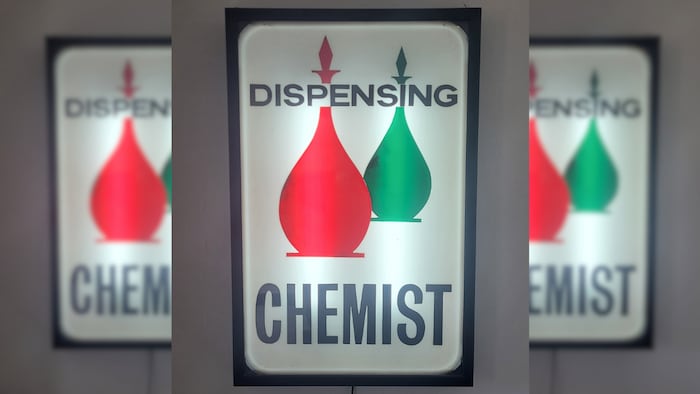
Some 200 pharmacy-related items will be auctioned by the Cotswold Auction Company on June 24 and 25.
The lots are drawn from the private collection of professor Darrin Baines.
Amassed over two decades, the collection features items from as far back as the early Georgian era, and a near complete set of C+D magazines spanning from 1859 to 2015.
Read more: Theme park’s £20k Victorian pharmacy set for auction
Baines told C+D the collection came together when he “started writing about pharmacy technology and I talked about how Victorian pharmacies developed, but I realised I didn’t know what it was like.
“So, I bought everything that would have been in a Victorian pharmacy, from pill-making machines, to bottles, and drawers.”
Shops, carboys and mahogany cabinets
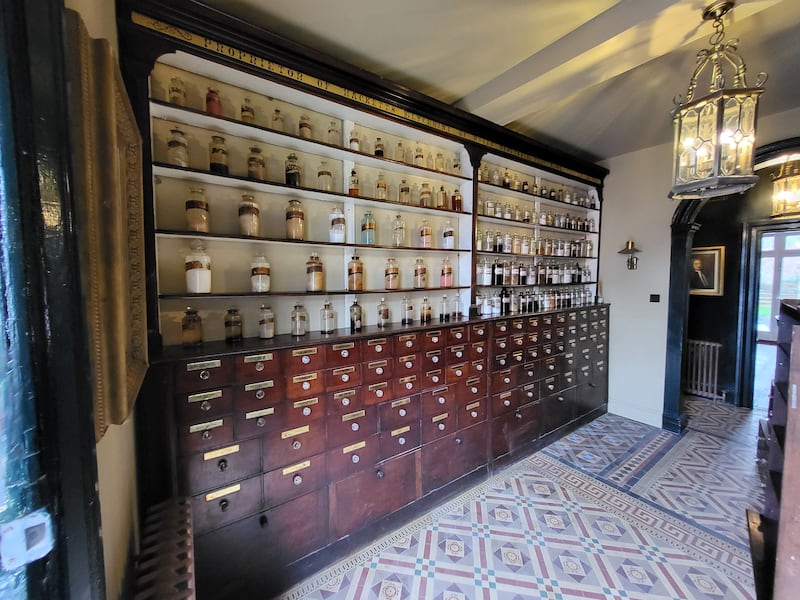
Some of the items being auctioned off include a complete pharmacist shop from 1880 that Baines bought from Upwell, Norfolk. He hopes to secure £15,000 from that particular lot alone.
He also is selling a large mahogany display cabinet with a glass advertising label reading ‘Proprietor of Hackett’s Glycerine of Roses Vegetable Pills Blood Purifier’, which Baines says is “the only one in the world”.
“It’s a little note talking about being the editor of the Pharmaceutical Journal and how much hard work it was.”
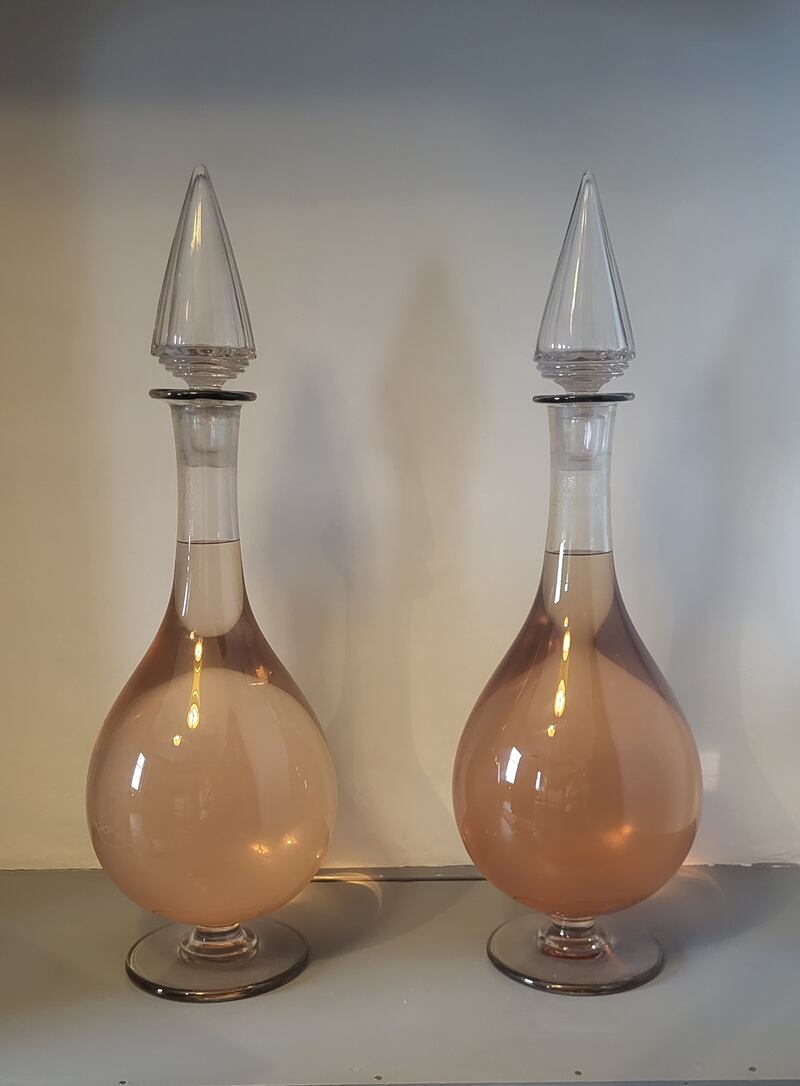
He added: “I bought a hanging carboy which is so rare. This hangs off a brass dragon’s body. I’ve got a set of 15 bentwood canisters which would have contained herbs from France.
“I’ve got an autograph and cartoon from Jacob Bell who started the Pharmaceutical Society of Great Britain [now the RPS].
Read more: Pharmacy in the 17th century: a look inside an apothecary’s shop
“It’s a little note talking about being the editor of the Pharmaceutical Journal and how much hard work it was.”
Three periods of pharmacy
Baines has worked in academia over the last 20 years and had stints as a professor of health economics at Bournemouth University and Coventry University.
From his research, he broadly categorises pharmacy into three periods.
“The role of the pharmacist was to show in front of you the ingredients you’re getting and mixing it in front of you, so you see you’ve got decent stuff.”
“The first period was of wooden drawers and herbs in apothecaries. Chemists and druggists were the era of the glass, so big windows, the carboys.
“After WW2, they moved into the era of cardboard and plastic, as things became more about manufacturing and production lines and doing everything quickly.”
Read more: Pharmacy ‘ghost sign’ uncovered by new ‘escape room’ tenants
He says in the past, it was “to do with people making herbs and pouring chemicals. In the past, pharmacists needed technologies to make medicines. After WW2 when the drug industry came, they didn’t need any technology in the pharmacy.
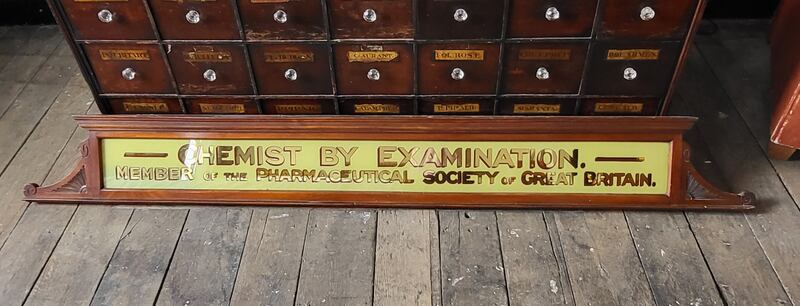
“That’s why I bought all the stuff, because I wanted to see what technology they used to work with. Pharmacy was there to guarantee the quality of medicine.
“The role of the pharmacist was to show in front of you the ingredients you’re getting and mixing it in front of you, so you see you’ve got decent stuff.”
Read more: Exploring pharmacy museums around the world
Baines is selling his collection due to moving from his Victorian townhouse that was filled with his pharmacy collection.
Auctioneer Lindsey Braune said Baines’ collection is “truly remarkable” and hopes the “fascinating objects find an equally loving new home”.
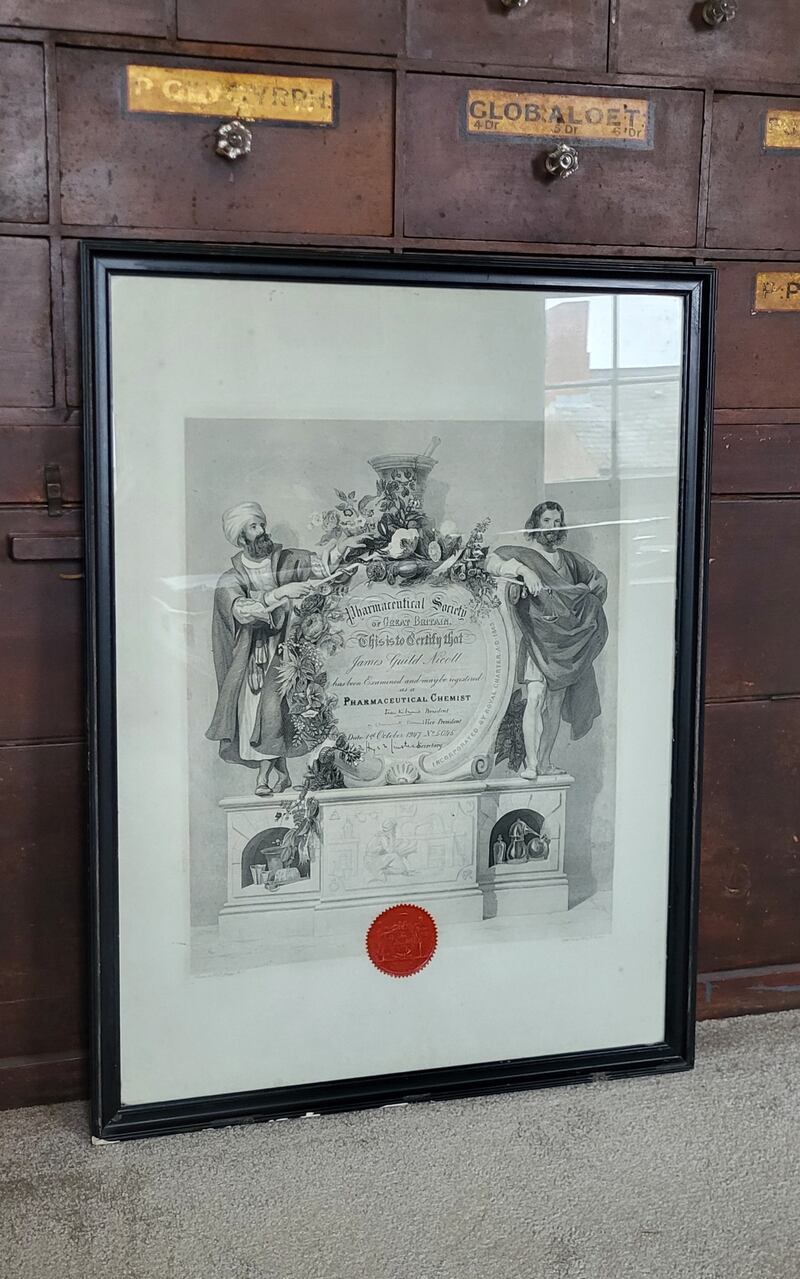
She added: “The collection is so extensive it is occupying a large section of our Cirencester saleroom, which will be open for viewing in the days before the auction.”
Details for the auction on June 24 and 25 can be found here.
Read more: How were Pharmacy First conditions treated 1,000 years ago?
It comes as a recently closed Cornwall theme park sold off its model village, which included an early 20th century “time capsule” pharmacy available for an estimated £20,000.
And in March, C+D spoke to a museum researcher who discovered the inventory of an apothecary from the 1600s and what it suggests he used to treat health conditions.