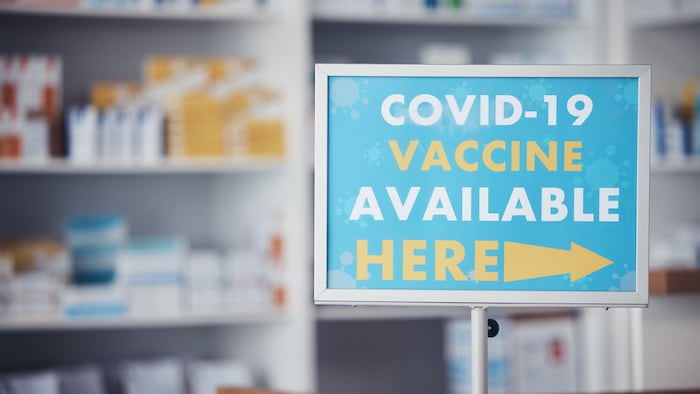
An official inquiry into vaccine delivery during the Covid pandemic has found that pharmacies were “underutilised” early on.
The report, published on April 16, advised that “in a future pandemic”, community pharmacies should be used to provide vaccines “at an earlier stage, unless there are clear logistical or operational barriers to doing so”.
“This will be especially effective in areas likely to have lower vaccine uptake and where travel may be a barrier to vaccine access, including, for example, areas of high deprivation,” it said.
Read more: Pharmacy ‘heroic’ during Covid as NHS ‘came close to collapse’
The recommendation comes after the inquiry heard concerns from the National Pharmacy Association (NPA) that “pharmacies were underutilised, particularly in England, in the early stages of vaccine rollout”.
The report said it “understands the concern that pharmacies were underutilised at the start of the pandemic”, and noted that pharmacies were a “useful way of reaching people in a convenient and familiar way within their local community”.
But it highlighted that the “delivery and storage requirements of the vaccines acted as a constraint in the first few months of vaccine rollout” and that “the desire to avoid waste and initially to restrict their use was reasonable”.
“Maximise uptake” of vaccines
The inquiry noted that service specifications for pharmacies – set by NHS England (NHSE) in January 2021 – included “requirements for pharmacies to operate minimum opening hours of 8am to 8pm, seven days a week, and to vaccinate at least 1,000 people each week”.
In a meeting with the senior vaccine deployment team and then-Prime Minister Boris Johnson that month, however, “it was noted that only about 200 of the more than 11,000 pharmacies in England were being set up for vaccine deployment”, the report said.
And Johnson reportedly “expressed concern about the need to maximise uptake” and whether “enough was being done through community pharmacies”, it added.
Read more: JCVI: Extend RSV jab to over-65s with chronic respiratory disease
According to the inquiry, NHSE’s “position” was that “the average pharmacy” only injected about 260 flu vaccines per year, and pharmacies were “likely to be less efficient at delivering high volumes of vaccinations compared with larger sites”.
The body did acknowledge, however, that community pharmacies would be “critical for reaching communities where uptake was lower”.
Read more: ‘Commission by age’ for better vaccine uptake, urges CCA
The report also highlighted that the NPA asked the government in January 2021 to “make more use of pharmacies in light of their place at the heart of local communities”, as this would “take pressure off GPs”.
But the government’s response was that “in the context of limited vaccine supply at the time, it needed to concentrate on sites able to deliver at high volume and avoid the risk of wasted vaccines”.
Pharmacy’s role across UK
The report also included data on the role community pharmacies played in Covid vaccination across the UK:
- In England, 1,500 community pharmacy-led vaccination sites were established by the end of 2021 and they were “responsible for 20% of all Covid vaccinations during the first year of rollout”
- In Northern Ireland, pharmacies “were not used to deliver vaccines at all until March 2021”, at which point around 350 joined the delivery programme with the aim of “providing more local points of vaccine delivery”
- In Scotland, there was a “different model of vaccine delivery”, meaning pharmacies were only used to deliver “0.1% of vaccines” as of June 2022
- In Wales, pharmacies played a smaller role in vaccine delivery than GP practices, due to the pharmacy sector’s “lack of experience in previous vaccination programmes” and the “suitability of small pharmacy venues for significant footfall in the context of social distancing”
“More could have been helped”
NPA chief executive Henry Gregg said the report shows pharmacies “saved hundreds of thousands of lives by delivering 40 million vaccinations at the height of the Covid pandemic”.
But it suggests that “many more people – particularly in deprived areas – could have been helped if the government had turned to the pharmacy network earlier”, he stressed.
Gregg also argued that the government could “help tackle a wave of vaccine hesitancy” that has “surged” since the pandemic by allowing pharmacies to “roll out more vaccination services to patients, particularly in areas where uptake is lower”.
And he said the government is “playing with people’s lives if it does not ensure there is a strong pharmacy network” that is “ready for the inevitable health crises of the future”.
Read more: Plans for ICBs to commission vaccines delayed by a year
It comes after an inquiry into Covid’s impact on the UK healthcare system noted that pharmacists “were not treated in the same way” as other health professionals during the pandemic.
The report, published last month, also noted that around 95% of community pharmacists in England, Scotland and Wales were “at high risk of burnout” during the pandemic.