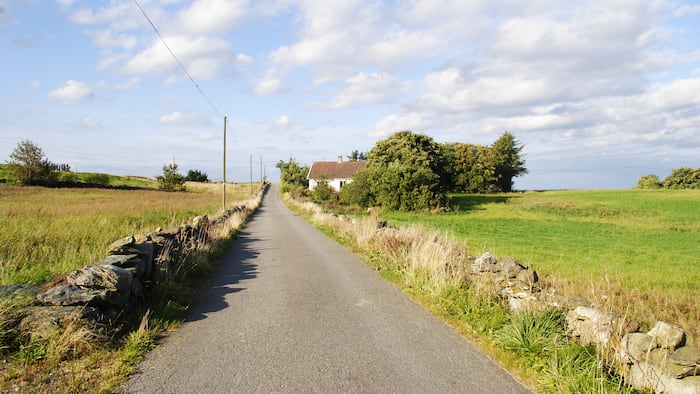
Pharmacy services are one of the NHS’s “policy blind spots” as a fifth of England faces a “rural penalty” of lower NHS funding and poorer access to doctors under the government’s 10-year health plan, a think tank has warned.
A report by Policy Exchange, published yesterday, said that despite new services such as Pharmacy First being introduced to relieve the pressure on GP surgeries, rural patients cannot benefit “in the same way” as towns and cities “if there is no local pharmacy left to provide them”.
Responding to the report, National Pharmacy Association (NPA) chief executive Henry Gregg noted that “rural communities have suffered disproportionate levels of pharmacy closures due to historic underfunding, leading to pharmacy deserts in some of the most isolated communities in the country”.
Read more: Over 280,000 people have lost their local pharmacy this year
He said the government “must address these gaps in provision and provide long-term investment in our community pharmacy network” to end pharmacy closures and move care into the community.
NPA analysis published last month revealed that 1,500 pharmacies have shut for good since 2017.
The report also cautioned that the NHS framework for neighbourhood health needs to recognise high travel distances, costs and limited choice in rural areas.
Read more: ‘Has to change’: Pharmacy numbers shrink as demand grows
And it said that for the shift from hospitals to the community to succeed, rural and coastal areas must “be able to compete on a level playing field in recruitment and retention and need to be funded according to their local condition”.
Health and Social Care Committee chair Layla Moran MP said recognising the “different circumstances” of rural communities is “not special treatment”, and that living in a rural or coastal location should not mean poorer access to healthcare.
“Everyone deserves a fair chance of a healthy life, wherever they call home,” she said. “When it comes to health, rurality should be recognised, not penalised.”
“Overlooked”
The report noted Department for Environment, Food & Rural Affairs research that found almost half of people living in rural areas fell into the “very low connectivity” band when analysing how easily people could reach a pharmacy, GP or hospital.
It said these populations are “effectively among the most cut-off from NHS services and will therefore have far less choice when accessing care”.
The report found that limited access to services such as pharmacies can place additional demands on GPs, as funding formulas do not “adequately reflect the additional workload and complexity faced or for the additional costs faced by rural and coastal general practice”.
Read more: Local govt working with pharmacy to stop ‘immunisation inequality’
It noted that a community pharmacy “may not be viable” in some very rural locations, and dispensing doctors offer a “workable solution” to dispense in areas with no pharmacy access.
But it called out recent government policy that had “overlooked these rural outposts” after NHS England said dispensing doctors were not “specifically considered” to be included as providers in the recent one-off MenB vaccination service.
Policy Exchange recommended that where services are delivered through community pharmacies, they should also be commissioned to existing dispensing GP practices serving areas where a community pharmacy “may not be viable or accessible”.
“This should be built into national programmes, particularly vaccinations and public health services, with the funding, training and support needed,” it said.
“Centralisation by another name”
The report also said funding formulas, workforce policy and assumptions around neighbourhood health have “neglected” the reality of how healthcare is delivered in rural settings and could damage “continuity of care and patient choice”.
It said neighbourhood health “risks becoming centralisation by another name” in large parts of the country, as frameworks built around populations of 50,000 to 250,000 “treat headcount as a proxy for proximity, when clearly in many areas it is not”.
When it comes to recruitment and retention, the report found that coastal communities have 14.6% fewer postgraduate medical trainees, 15% fewer consultants and 7.4% fewer nurses per patient than the national average “despite older, less well populations”.
Read more: Pharmacy closures in rural areas hit four-year peak, DH reveals
And high-cost area supplements pay staff more to work in cities but “nothing extra to work in remote or coastal Britain”, with the report recommending reviews so that rural and coastal employers have the funding to compete for their workforce.
Report co-author Gareth Lyon said pay structures make it difficult for rural providers to recruit and retain staff, and warned this could lead to the NHS 10-year health plan having “fewer local services and longer journeys for large parts of England”.
He stressed that “ending the rural penalty is essential to the plan’s success”.
In the report, Policy Exchange recommended implementing “an additional weighting for rurality” within existing NHS budgets for primary care services.
Read more: ‘Pharmacies are vital’: Lincolnshire Co-op boosts rural naloxone access
It also called for a coastal and rural healthcare minister to be appointed in the Department of Health and Social Care, and for impact assessments on these areas “before any new NHS policy, infrastructure change or reorganisation is implemented”.
And it said there should be an “unavoidably small practice adjustment” for remote areas where closures would risk leaving patients “without reasonable access to care”, as well as a mandatory new “local access test” before any community hospital or GP premise is closed.
It comes after analysis found that over 500 pharmacies closed their doors between 2022 and 2025, with pharmacy deserts continuing to grow.