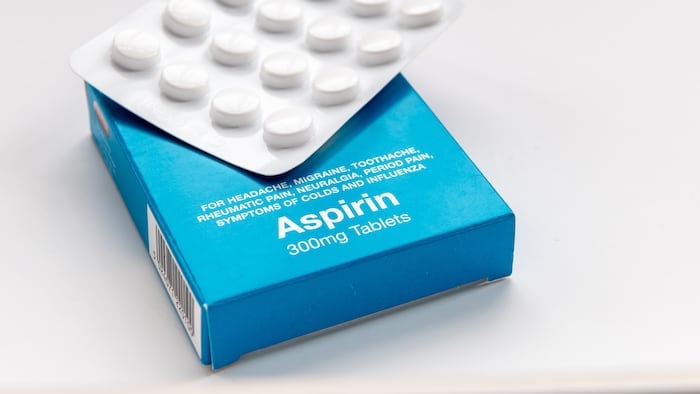
The government has imposed an export ban on aspirin as pharmacies across the UK face shortages of the painkiller.
On January 16, the Department of Health and Social Care added aspirin to its list of medicines that cannot be hoarded or exported out of the country because they are “needed for UK patients”.
According to the government’s website, the restriction applies to all strengths and pharmaceutical forms of the drug.
“Dangerous”
National Pharmacy Association (NPA) chief executive Henry Gregg today (January 20) told C+D that the body is “concerned” by reports of pharmacies “being unable to order in stocks of aspirin” and “the implications this might have” for their patients.
“For those that can get hold of supply, costs will far exceed what they will be reimbursed by the NHS - yet more signs of a fundamentally broken pharmacy contract in desperate need of reform by the government,” he added.
Read more: NHSE assures pharmacists flu jabs ‘remain available’ despite reports
He said the NPA has “long called for pharmacists to be able to make substitutions where a medicine is not in stock and it is safe to do so” - and that the “current status quo is not only frustrating for patients, it is also dangerous”.
“It is madness to send someone back to their GP to get a prescription changed when a safe alternative is in stock,” Gregg added.
“It risks a patient either delaying taking vital medication or forgoing it altogether, which poses a clear risk to patient safety.”
Significant concern
Community Pharmacy England’s (CPE) director of research and insights James Davies said drug shortages like those currently affecting aspirin “remain a significant concern for both patients and community pharmacies”.
He added that one in four pharmacy teams “spend more than two hours each day” sourcing alternative medicines for their patients, “diverting attention from other essential tasks and increasing workload pressures”.
Read more: New leaflets tell pharmacists ‘what to do’ about drug shortages
Davies said the cost of drugs in the UK has “been driven down over time” due to “sterling work by community pharmacies” - but that while this is positive for the NHS, it has “in turn driven fragility in the medicines market”.
“As shortages continue to take a toll on patients and pharmacy teams across the country, the government and the NHS must intervene now to stabilise the medicines market, tackle supply chain disruptions and improve access to essential medications for patients,” he added.
Read more: Creon cancer drug SSPs extended for third time into new year
It comes after the DH and NHS England (NHSE) joined forces in November to publish “leaflets and posters” for community pharmacists on how to handle medicine shortages.
CPE said the resources were created to guide pharmacists on “what to do when faced with medicine supply issues” and where “to find the most up-to-date management advice on national supply issues” to ensure they can “best support their patients”.
