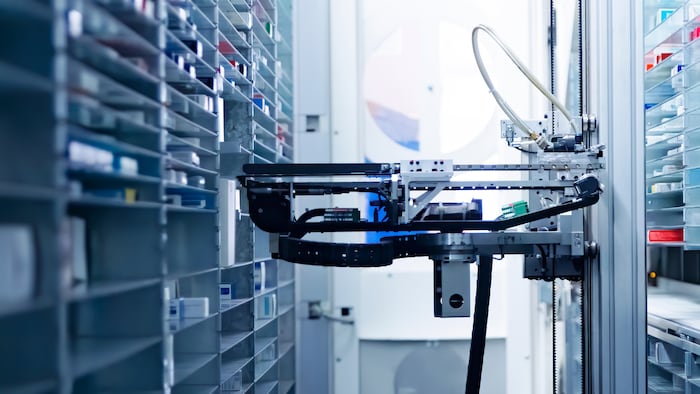
A pharmacy using robotics flagged a barcode error that has sparked a medicines defect notification, the MHRA last week (October 23) announced.
The medicines watchdog said in the alert that “a pharmacy that uses robotic dispensing” had reported duplicate Global Trade Item Numbers (GTINs) - the unique identifiers for trade items found beneath barcodes - being used on some drugs manufactured by Relonchem Ltd.
Read more: Barcode accuracy must be treated as a patient safety issue
Losartan potassium/hydrochlorothiazide 50mg/12.5mg coated tablets and losartan potassium/hydrochlorothiazide 100mg/25mg coated tablets were found to have the same GTINs as losartan potassium 50mg coated tablets and losartan potassium 100mg coated tablets respectively, it said.
Relonchem Ltd also informed the MHRA that a duplicate European Article Number (EAN) - originally assigned to lansoprazole 30mg gastro-resistant capsules - has been assigned to risperidone 0.5mg tablets in error, it added.
Read more: MHRA busts ‘first’ UK illicit weight loss jab factory in record raid
The MHRA said that the affected batches of losartan potassium/hydrochlorothiazide 50mg/12.5mg coated tablets are NG4001, NG4002 and NG5001, while the affected batches of losartan potassium/hydrochlorothiazide 100mg/25mg coated tablets are NH4001, NH4002 and NH5001.
There are no batches of either losartan potassium 50mg coated tablets or losartan potassium 100mg coated tablets currently on the market that are within their expiry date, it added.
And it set out that the affected batch of risperidone 0.5mg tablets is 151061.
“Consider extra safeguards”
The MHRA stressed that “for all impacted products, the other product details on the carton including the name, strength and pharmaceutical form of the medicine are correct”.
It advised healthcare professionals to “use caution and consider extra safeguards for these batches in robotic or automated dispensing systems or stocking systems” and to “carry out manual dispensing and stocking as appropriate”.
“Pharmacy providers should also consider local assessments in line with this notification and inform Relonchem Ltd of any stock that cannot be used in an automated dispensing system,” the agency added.
Read more: MHRA seizures of weight loss jabs rise 163% in three months
It comes after a superintendent pharmacist this month warned of the risks of barcode inaccuracy and called for the MHRA to take action.
In a piece for C+D, superintendent pharmacist Zeinab Ardeshir wrote that “the MHRA should make accurate GTIN barcodes a mandatory part of the marketing-authorisation file”.
Read more: MHRA reassures UK public that paracetamol is ‘safe’ for pregnant women after Trump controversy
Ardeshir added that “if a barcode is wrong, it should be treated as a labelling error, subject to correction and, where necessary, recall”.
“Pharmacists are the final safeguard in patient safety and the first to spot when something isn’t right upstream. Barcode accuracy may sound technical, but its consequences are deeply human,” she said.