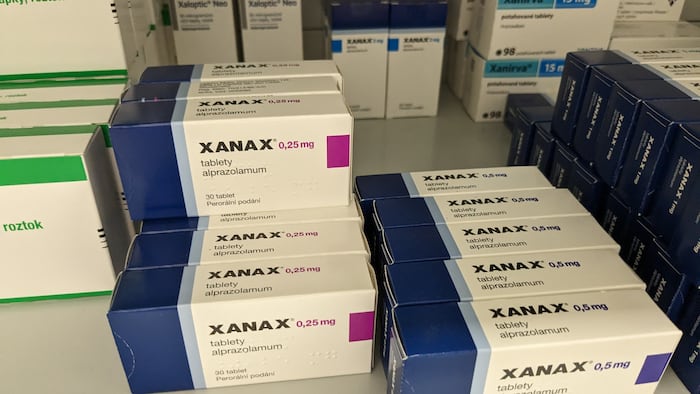
Osama Hamed, registration number 2205339, was given a six-month suspension order by the General Pharmaceutical Council (GPhC) after failing to secure 1,082 boxes of Xanax tablets “within the legal supply chain” and supplying them “without the requisite wholesaler’s licence”.
At hearings between June 15 and 17, the GPhC’s fitness to practise (FtP) committee heard that “over 60,000 tablets” of Xanax that had been ordered to Hamed’s pharmacy were “unaccounted for”.
According to the determination document, Hamed told the regulator he had been “stockpiling” packs of Xanax “with the intention of supplying them to an overseas charity which supported refugees”.
Read more: Pharmacy tech suspended over undisclosed assault conviction
The committee recognised that Hamed had apologised for his misconduct and “has shown remorse”.
But it stressed that he had failed in his position of “leadership and trust” as a superintendent pharmacist.
“Over 60,000 tablets”
The committee heard that Hamed is the superintendent pharmacist of Berkeley Court Pharmacy in central London, owned by Bloom Healthcare Ltd (BHL), of which he is the sole director.
In May 2025, the GPhC received a tip-off suggesting that BHL had bought “unusually high quantities” of Xanax, a class C controlled drug only available by private prescription.
The regulator said neither the pharmacy nor BHL holds a wholesale distribution authorisation allowing it to sell or supply medicines “to anyone other than a patient using those medications”.
Read more: Pharmacist suspended after police caution for stealing drugs
A GPhC inspector visited the pharmacy for an unannounced inspection on June 24, 2025, and spoke to Hamed over the phone to question him about the Xanax orders.
“Mr Hamed did not provide any explanation for the unusual purchasing pattern of Xanax described, and he stated that the pharmacy did not often supply Xanax against private prescriptions to his knowledge,” the inspector said.
They added that they found seven complete packs and one split pack of Xanax in the pharmacy, but could not find any private prescriptions for Xanax dating back to August 2024 in the pharmacy’s prescription records.
Read more: Suspended after not reporting cannabis driving conviction
The next day, a further 88 boxes of Xanax were found at the pharmacy and the inspector rang Hamed again on June 30 to ask why there was a discrepancy between the packs ordered by the pharmacy and those in stock.
“I asked why he would continue to order Xanax tablets when there was no legitimate use for them, [and] Mr Hamed explained that he had been stockpiling them with the intention of supplying them to an overseas charity which supported refugees,” the inspector said.
“When asked on what legal basis these supplies would be made,” they added, “Mr Hamed suggested he thought he may be able to wholesale under his pharmacy licence.”
Read more: Superintendent struck off and two pharmacists suspended
On July 4, 2025, following the inspection, the pharmacy was prohibited from “obtaining, selling or supplying medicines containing alprazolam”.
The GPhC said further enquiries found that between September 2024 and June 2025, 1,177 packs of 500mcg Xanax tablets had been delivered to the pharmacy from three different wholesalers – and of these, a total of 1,082 packs, or over 60,000 tablets, were “unaccounted for”.
The regulator then informed Hamed that it had opened an investigation over “concerns that he had failed to ensure that there was proper oversight and management” regarding the purchase and supply of Xanax.
Read more: Pharmacist suspended for failing to report driving convictions
Hamed’s legal representative told the GPhC that the pharmacist had supplied Xanax to a number of international charities, and provided letters from the charities “confirming that requests had been made” for Xanax.
He also said Hamed was told over the phone who would be coming to collect the medication on behalf of the charities, and he would “check their identity” before handing over the stock.
Read more: ‘Deplorable’: Online pharmacist suspended over 70k prescriptions
Hamed told the FtP committee that he “strived to help” charities through his business and felt “a strong moral and emotional obligation” to do so “having personally experienced conflict and humanitarian suffering”.
He said he did not “receive or seek any commercial profit from the supply” of the drugs, adding that his understanding at the time was that he “could supply a small amount of medication without a wholesale licence”.
“Repeated failures”
The FtP committee acknowledged that Hamed had “fully engaged with the disciplinary process” and had provided “testimonials which spoke positively of his personal and professional attributes”.
But it found that his conduct involved “repeated failures over a significant time frame”, and highlighted the “quantity and nature of the drugs involved”.
Read more: Ex-Tesco pharmacy manager suspended over dispensing errors
His conduct also “involved a risk of harm to the public”, the regulator stressed, and followed “continued errors relating to controlled drugs and record keeping” after during a previous inspection in 2024.
It noted that the pharmacy had previously been issued an improvement notice in February 2024 over failings in the “prescribing and supply of private prescriptions”, but by August 2024 a re-inspection found the standards were being met.
“Deeply regretted”
The FtP committee said there was “no indication” that Hamed would have stopped supplying Xanax to the charities “had the GPhC not intervened”.
And it found that his fitness to practise was impaired on “public interest grounds” to “uphold proper professional standards and public confidence in the pharmacy profession”.
Hamed told the committee that he had “wrongly treated the situation as an exceptional humanitarian circumstance rather than as a medicines governance issue”.
Read more: Pharmacy tech suspended again after using slur against colleague
He said the regulatory proceedings had been a “humbling and transformative experience for him” and he “deeply regretted what happened”.
The committee said removal from the register would be “disproportionate” as Hamed had already made “some progress towards remediating” his conduct, and concluded that a suspension was an “appropriate and proportionate sanction”.
“The testimonials suggest [he] has the potential to be a good pharmacist, and a suspension would give him time to show that,” it added.
Read the determination in full here.