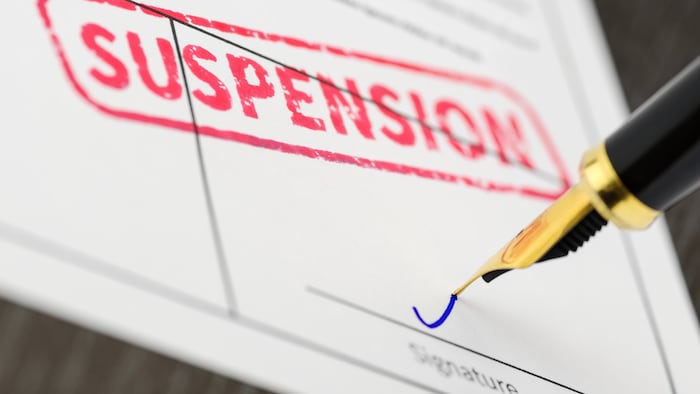
William Terry Obeng, registration number 2087223, has received a six-month suspension from the General Pharmaceutical Council (GPhC) after it found he made “unsafe” prescribing decisions across four online pharmacies, including one for a patient that later died of an overdose.
At hearings between October 12 and 15, the GPhC’s fitness-to-practise (FtP) committee heard that Obeng “failed to obtain adequate information in relation to the patients’ health” and “failed to access or attempt to access patients’ GP medical records” to get a “full picture of their physical and mental health”.
According to the hearing document, Obeng also prescribed propranolol to a patient “with a history of poor mental health and self-harm” without putting “adequate safety-netting in place”.
Read more: Pharmacy bodies call for guideline review over propranolol concerns
The regulator accepted that Obeng had engaged in the proceedings, admitted to many of the allegations and had no prior FtP concerns.
But it stressed that he had prescribed more than 8,000 “high-risk” medicines over two years and seven months using “limited” patient information.
“Principally” using questionnaires
The GPhC said Obeng worked at UK Meds between November 2019 and February 2022, Prescription Doctor between January 2022 and May 2022, PillDoctor between August 2021 and June 2022, and Pharmacorp between April 2022 and July 2022.
Over this period, the GPhC found that he prescribed “at least 8,243 high-risk medicines”, relying “principally on the information received in an online questionnaire” and failing to refer patients back to their GPs for reviews and monitoring.
Read more: ‘Highly toxic’: Coroner warns GPs of propranolol overdose risk
Obeng also admitted failing to “adequately consider the possibility of medication dependence and misuse” and “put adequate safety netting in place”.
At UK Meds, Obeng issued an estimated 52,347 prescriptions, of which 20 were for high-risk, controlled drugs and 5,303 were for high-risk but not controlled drugs.
The hearing document noted that he “allegedly prescribed” propranolol 2,660 times - and that while consent to contact the patient’s GP was given for 928 of those prescriptions, Obeng contacted the GP in just 227 cases.
Read more: Pharmacist suspended for substituting opioids with water
The GPhC said that at PillDoctor, there was “no actual evidence” of prescribers corresponding with GPs where patients had consented.
Where patients had consented for the pharmacy to share information with their GP, “it was seen that the online prescriber did not make any records to explain their justification for prescribing”, it added.
At Prescription Doctor, where Obeng was the sole prescriber, he issued 2,920 prescriptions classified as high-risk but not controlled.
Read more: ‘Significant rise’: GPhC received almost 10,000 concerns this year
The GPhC found in an inspection of the pharmacy in April 2022 that it “was not able to demonstrate that sufficient safeguards were in place to make sure the medicines it supplied through the prescribing service were clinically appropriate”.
It also noted that several issues were identified during a GPhC inspection of Pharmacorp in April 2022, during which time Obeng was again the sole prescriber.
Read more: ‘Reckless’: Pharmacist struck off for dispensing extra methadone
The regulator found that the pharmacy’s prescribers “did not follow written procedures” when prescribing for higher risk medicines “such as cyclizine and propranolol”, which it said created a “risk that people may receive medicines not suitable for their needs”.
Pharmacorp also “did not keep adequate clinical records” and its website “allowed people to select a prescription-only medicine and quantity before starting a consultation”, it said.
Patient death
The committee heard that on June 15, 2021, while working for UK Meds, Obeng prescribed propranolol to a patient following an online request for a prescription.
The GPhC said the patient “concealed” that she was “an inpatient at a psychiatric ward” and ordered the prescription to her home.
Read more: From a lawyer: Could FtP delays work in pharmacists’ favour?
Obeng accepted the information provided by the patient “at face value” and prescribed her a three-month supply, it said.
The patient died from a propranolol overdose on June 19.
During the hearing at the coroner’s report in January 2023, Obeng confirmed that at the time of prescribing, he “was not aware that she had overdosed on propranolol” just 10 days before.
Read more: Black and Asian pharmacists ‘over-represented’ in GPhC concerns
He also told the court he was “not particularly” concerned that the patient had not provided consent to share information with her GP, adding that it is “very, very common for patients to decline consent”.
The inquest into the patient’s death concluded that with regards to the online pharmacies, there was a “lack of integrated system or records which could be accessed by multiple pharmacies, a “lack of access to the GP summary care records [and] other pharmacy supplies” and a “lack of consent to the sharing of information”.
“Shown insight”
The GPhC acknowledged that Obeng had “shown insight in relation to training, the risks of online pharmacies and his current practice” since the misconduct.
It recognised that he had “received positive references” and had “undertaken ongoing reflection since 2022.
And it said he had “remediated much of his practice” through working in NHS 111 and “all areas of the NHS to see how the system worked”, as well as obtaining specialist mental health training and “extensive supervision”.
Read more: Pharmacist suspended over ‘dangerous’ overseas prescribing
But the regulator stressed that the patient that died of a propranolol overdose was “vulnerable”.
It also noted that Obeng had “breached” his interim conditions of practice order - and said this “could have been avoided if he had adequately communicated” with the council “prior to undertaking roles which may have risked a breach”.
“Deplorable”
The committee said Obeng’s conduct would be seen as “deplorable by fellow practitioners”, and highlighted his role in a “vast, unsafe, online and international dispensing operation” with a “very high potential to put patients and the public at a risk of harm from medicines liable to abuse and misuse without proper medical oversight”.
But it was of the view that his misconduct “can be remedied and he is close to remediating it”.
Read more: Warning after dispensing error ‘contributed’ to patient death
The regulator resolved on a six-month suspension for Obeng, which it said was “appropriate and proportionate”.
It explained that it would have issued a nine-month suspension if not for the interim suspension imposed on the pharmacist on July 7.
Read the determination in full here.
When life is difficult, Samaritans are here – day or night, 365 days a year. You can call them for free on 116 123, email them at jo@samaritans.org, or visit www.samaritans.org to find your nearest branch.