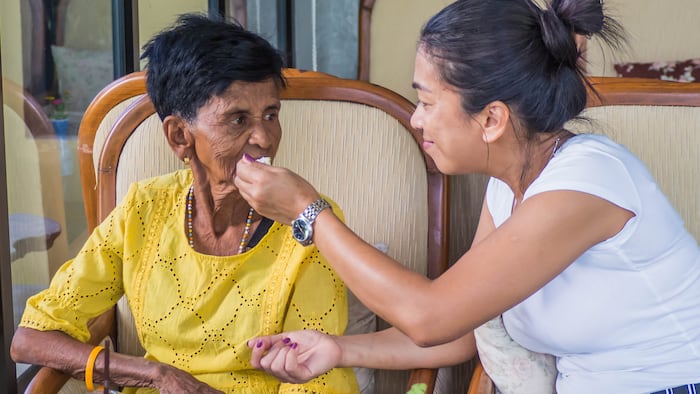
There is an “urgent need” for healthcare professionals including pharmacists to “recognise and support women and informal carers”, the International Pharmacy Federation (FIP) has said.
In a policy statement published on August 31, the FIP said that millions of informal carers “shoulder the responsibility of managing medicines and supporting loved ones every day, yet their own health and wellbeing often go unrecognised”.
Read more: Pharmacists should play ‘greater role’ in preventing SUDs, says FIP
The United Nations defines “informal” carers as those who provide care to those “with whom they have an existing relationship, such as a family member, friend or neighbour”.
Globally, informal caregiving is “highly gendered”, with estimates suggesting that approximately 80% of informal, unpaid carers are women.
“Accessible and trusted”
The FIP called for “stronger action to support and empower women and informal carers through pharmacist-led care”, with “particular attention to the disproportionate caregiving burden experienced by women”.
“Pharmacists are among the most accessible and trusted healthcare professionals and are well positioned to support informal carers, particularly women, through medicines management, health education, preventive care, digital health literacy and safe transitions of care,” it said.
Read more: How can pharmacy develop more female leaders?
“By empowering carers and promoting the responsible use of medicines, pharmacists can help improve health outcomes for both carers and those they support,” it added.
The body also highlighted that pharmacists may be “among the first points of contact for women facing gender-based and domestic violence”, and that they “can play a role in recognising vulnerability and safely referring individuals to appropriate support services”.
Read more: ‘We can keep growing’: Women pharmacy network becomes CIC
The FIP’s statement called on pharmacists to:
- Involve informal carers in medicines-related discussions where appropriate, while respecting the patient’s preferences, autonomy, consent and confidentiality
- Recognise signs of carer burden, fatigue or inability to manage complex medicines regimens, and to refer carers to appropriate health, social care or community support services
- Empower women and informal carers through the delivery of training, health promotion campaigns and medicines information services
- Develop services focused on women and informal carer’s health, to mitigate potential negative effects of caregiving roles
“Engage pharmacists meaningfully”
The body also called on national governments to “engage pharmacists meaningfully” by “promoting their medicines expertise as a pivotal service in supporting women and informal carers” and to support pharmacists’ contributions “through appropriate remuneration”.
Co-chair of the policy committee Virginia Olmos said the policy “highlights the growing pressures faced by informal carers” as “more care is delivered in homes and communities”.
Read more: RCPharm ‘concerned’ by proposed international pharmacist reforms
She said pharmacists are “uniquely placed to help carers navigate increasingly complex medicines regimes”.
And co-chair Ema Paulino said that “by empowering carers, pharmacists can improve health outcomes, reduce inequalities and build more resilient, people-centred healthcare systems.”
The FIP also published a policy statement this week calling for pharmacists to play a “greater role in preventing substance use disorders” by “supporting early intervention and reducing harms”.