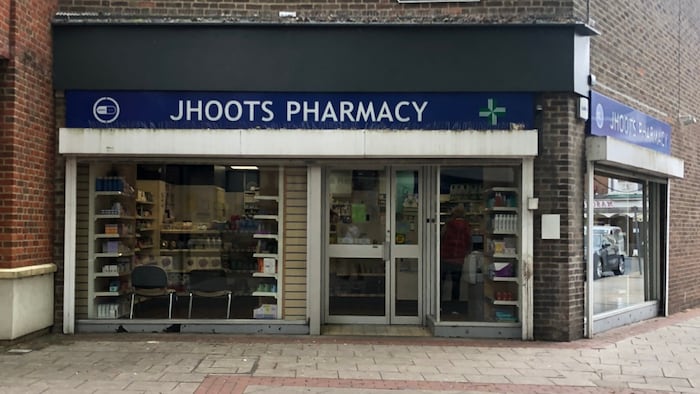
Right at the end of December 2025, Allied Pharmacies announced it had purchased a further 68 ex-Jhoots branches that belonged to Jhoots Pharmacy Limited.
It initially bought 61 Jhoots stores in November that were operated by the SNJ Health Group, with Allied taking over 129 pharmacies from Jhoots in total across the two deals.
Read more: Jhoots Pharmacy owed creditors at least £11m, filings reveal
The sale of the 68 branches was handled by Christie & Co, which was engaged by administrators FRP Advisory to review the pharmacies assets, market them, and advise on the offers received.
Christie & Co head of pharmacy Jonathan Board was “very happy” to facilitate the pre-packaged administration to ensure “a large number of much-needed front-line healthcare settings are reopened to patients who rely on them”.
Quick sale
Christie & Co was not involved in the sale of 61 Jhoots pharmacies in November, but that deal gave Board “some confidence” it could broker the sale of the 68 branches.
“Until November, people hadn’t been buying closed pharmacies, certainly not in any numbers like that,” says Board.
“It gave us the ability to reassure the administrators. The banks were asking what the likely outcomes would be. We were able to say if something similar has been done in the recent past, there’s no reason why it won’t be done again.”
Read more: REVEALED: Allied takes over 68 more Jhoots pharmacies
The “accelerated sale process” took a month which “compared to a normal transaction was very quick”.
FRP was engaged on November 19, and despite delays due to the festive break, bank holidays and the court closing, it sanctioned the sale to Allied Pharmacies on December 29, according to documents filed on Companies House.
Interest
FRP told “approximately 400 parties” who had previously shown interest in “similar transactions”.
From there, 13 parties signed NDAs which granted access to greater detail.
FRP additionally advertised on insolvency marketplace IP-BID which led to eight enquiries, and Christie advertised on the Independent Pharmacy Contractors Network (IPCN) group chat.
Read more: IN FULL: Jhoots pharmacy owner announces immediate rebrand
Board says there was interest from a “really wide range of buyers” who wanted to buy the pharmacies on an individual, small group or whole group basis.
“Most of them were pharmacy owners and a lot would have had a Jhoots trade near them,” he says. “Almost all were existing operators, and some were some sizeable chains looking to further grow.
“Obviously not everybody could buy the whole lot. Some of it would have been optimistic. If you’re a first-time buyer or a local operator, trying to buy some of these would have been a massive challenge.”
Read more: Allied takeover: Which ex-Jhoots branches have reopened so far?
FRP said interested parties were given eight days to submit offers as the short timeframe was “appropriate” because “further delays would have seen further NHS contract breach notices issued” and the potential for those contracts to be cancelled.
It noted that the “high-profile nature of the Jhoots situation” meant that “any credible parties with the capacity to transact were already well informed of the circumstances”.
Board confirms that “time was of the essence” and that reality “impacted the way this had to go”.
NHS
The individual and small group offers were rejected because they were not “economically feasible” and selling to multiple operators could “risk losing NHS contracts” because of the extra time needed to exchange with more parties.
Board says it was important to find a buyer that could “act quickly and the banks, the NHS and the General Pharmaceutical Council (GPhC) would have confidence in reopening those shops”.
“Ultimately, what everybody wants is patient access where these pharmacies have closed and a lot of patients have been left without provision in these areas.”
Read more: Exclusive: Allied went into Jhoots deal ‘blind’, says CEO
Board says the accelerated process meant visiting the business and speaking to the owner to get more information was limited.
The NHS were engaged in the process because of the Jhoots contracts with breach notices.
Board says the administrators were trying to tell them that in a short period of time the existing owner will go out of business and the new owner will be doing everything they can to reopen.
Read more: Exclusive: Unpaid Jhoots locum fees surpass £1m
“If the contracts are taken away, there’s no value to sell,” he says.
Meanwhile Christie was selling the “opportunity” to reopen these pharmacies “with the challenges that brings”.
“If people need medication and the pharmacy they used closed, they would have had to go somewhere else. So, nominations would have changed. The longer they’re closed, the harder it is to reopen.”
Offers
Board is coy on how much Allied bought the 68 Jhoots branches for, but the administrators statement details the four offers it received on a whole group basis, and their final bids.
The first round of offers ranged from £3.45m to £4.7m. FRP identified Allied’s offer as it’s “preferred bid” because it had “direct relevant experience of a similar transaction, both in nature and size, which mitigated any deliverability risk”.
The administrators set December 19 at 1pm as the final deadline for “best and final offers” after it started to receive more offers following “unsolicited additional interest”.
Read more: Jhoots: Allied to settle unpaid staff wages ‘in full’ amid takeover
Bidders confirmed they would also pay £960,000 “in excess of their offer” to meet rent and property costs for three months too.
To save time, FRP progressed sale documents with Allied on a “non-exclusive basis” and their final offer was recommended as the “best outcome achievable”, which was supported by Christie.
Read more: Revealed: Everything we know about action against Jhoots
The pharmacies were sold to Allied for a total sale consideration of £4.5m, with “all remaining employees” of those pharmacies to be transferred to Allied Pharmacies “as part of the transaction”.
Four days after the final bid deadline, one of the other bidders submitted a £6.2m bid but this was rejected because it was “out of time”, “contained deliverability risk”, and negotiations with Allied were in an “advanced stage”.
Straightforward deal
Board says the deal has taken the number of pharmacies Allied operates “through 300” and “arguably now, it’s the largest independent operator in the country”.
C+D previously reported in November that after purchasing 61 Jhoots branches, Allied had around 210 pharmacies in England and Wales.
In an exclusive interview with Allied’s chief executive Suhaib Abdullah, he said the chain went into the first Jhoots deal “blind”, and Board says this continued in the sale of the 68 Jhoots branches.
Read more: DH working to ‘resolve’ Jhoots situation ‘as quickly as possible’
“They were going into this blind, because there was only a very limited amount of information available to provide to them. But they knew what they bought before, so they probably knew more than anyone else because of that transaction.
“They were demonstrating they probably were in the best place possible to re-engage the NHS and landlords and reopen these shops, which was of paramount importance.”
“I’m sure in the fullness of time, the majority of those will open,” he adds.
Read more: Revealed: The 60 Jhoots locations taken over by Allied Pharmacies
In November, Allied said that 33 of the 61 ex-Jhoots branches it bought are trading again and it has access to 12 more that it expected to have up and running soon.
The 68-branch deal is one of the biggest Board’s been part of “in terms of numbers and locations”, but he says it’s “almost more straightforward” and very different to when dealing with clients he’s got to know over the years.
“This was more transactional and just had to get done.”
Read more: BREAKING: Allied Pharmacies takes over 60 Jhoots branches
And he’s positive about the role Christie took on in the deal that is hopefully going to help patients in the long-term.
“It’s very rare we’re selling a closed pharmacy. We’ve helped to provide that solution to get those closed pharmacies on the road to reopening, rather than being closed and lost forever. That’s a good news story.”