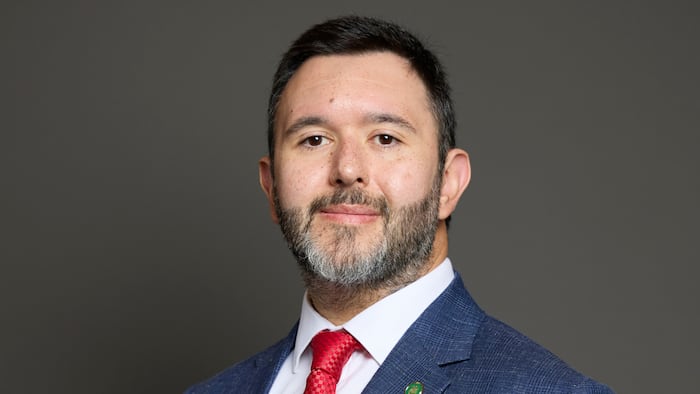
It’s an intriguing day to visit Westminster considering the Prime Minister resigned the day before. Slightly quieter than expected, no bustle of civil servants entering Portcullis House to sort out succession plans, just a bundle of young people arriving for an intern programme.
“Odds are looking like it’s going to be Andy Burnham,” says pharmacist and Labour MP for North Somerset Sadik Al-Hassan. “The practical reality of it is I don’t know if anybody is going to challenge. I’m not sure if anybody has the numbers.”
Burnham was elected as an MP for Makerfield on June 18, and questions were raised about whether it’s democratic for him to become the next PM without any formal leadership contest, but Al-Hassan is quick to dispel this.
“You vote for your MP, you don’t vote for Prime Minister. We’re not a presidential system. I’ll always encourage everybody to vote for their MP because they’re the one who are going to be representing you, your constituency, delivering for you.
“That’s what I do for North Somerset. I try and make sure that everything I do is what’s good for North Somerset.”
APPG
It’s one of a handful of responses that reinforce the fact that Al-Hassan is now a pharmacist turned MP.
In 2024 he voted to increase employers’ national insurance contributions, which increased pressure on the tight margins of pharmacy owners. He told C+D last year his “number one priority is always going to be my constituents, and within that, solving pharmacy as a problem. I’m always going to be a friend of pharmacy.”
Read more: Pharmacist MP proposes new PMR system ‘Project Bevan’ to govt
And Al-Hassan is still fully committed to fighting for the pharmacy corner where possible. He’s the chair of the All-Party Pharmacy Group (APPG), something he describes as one of his “greatest honours to champion the sector”.
“I believe we can have this bright shining future, I really do.
Read more: Pharmacist MP ‘honoured’ to be elected new APPG chair
“We can have a pharmacy role which is rewarding, interesting, and a true reflection of what we could be.
“We need to do better as a country in the way we look after our professionals and the systems that we build to support them. It’s one of the reasons why I’ve pushed so hard on a vision for what the sector is.”
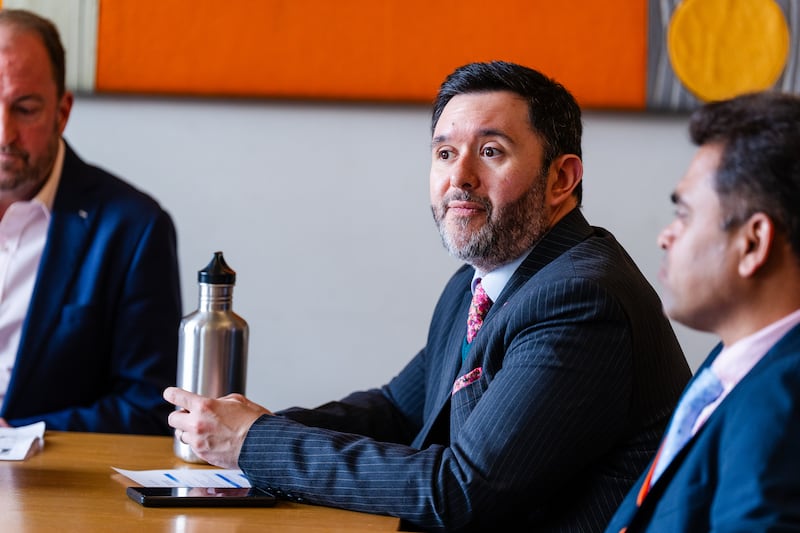
Pharmacy in 2040
That vision is set out in a document he wrote in January about primary care in 2040.
C+D reported last week on his proposals in Project Bevan to create an NHS-owned patient medication system (PMR) that will go further than the single patient record (SPR) introduced in the NHS Modernisation Bill last month.
He says the first thing he would introduce from his 2040 vision is to start the “transition of acute care”.
Read more: Al-Hassan: Pharmacy prescribing service ‘two or three years’ away
“Think of it like an expanded Pharmacy First, so it will be an independent prescribing (IP)-led service with patient group directions (PGDs) for technicians and a triage level so that everything gets escalated.
“Triaging that to protect the pharmacist’s time so that they can deal with medicines management, some prescribing, and looking at how audits and deprescribing for the system works as well.
“It’s a similar way to how GP surgeries do it now. That’s where I see the evolution, and we can finish that by 2029 if we do it in a stepwise process.”
Funding prediction
Early in Al-Hassan’s 2040 vision, he says “a stable, inflation linked funding arrangement is important to support the transition correcting for historical underpayment”.
When pressed further on how realistic this is, he comes up with a figure he thinks can be achieved.
Read more: Pharmacy ‘may not survive winter’ as pharmacist MP urges govt to avoid ‘past 14 years’ of mistakes
“Funding needs to be higher than inflation, it needs to be inflation plus. Over the next six years, £800m catch up of today’s money that’s missing seems realistic because we’ve changed our systems and processes to be more efficient. We’ve done that.”
Earlier this month he told fellow MPs that pharmacies “are receiving £800m less in real terms than a decade ago” and called the contract a “down payment on a brighter future” during a debate.
“Nobody’s going to turn around and say, ‘we shouldn’t put £2bn into frontline services, we should just give it to the profitability of pharmacy’
“It is just a start, not an end point. The 10.3% up is, of course, very welcome, but it comes against a backdrop of around a 9% yearly increase in costs.”
He also told MPs that the government’s own independent economic analysis found “a funding gap of £2bn a year” in how much it costs community pharmacy to provide NHS pharmaceutical services.
Read more: Pharmacist MP makes maiden parliamentary speech
Pharmacy minister Stephen Kinnock said the latest uplift represents “almost three times the growth of the overall NHS budget” and demonstrates the government is “putting our money where our mouth is”.
He has repeatedly said community pharmacy’s previous 19% uplift delivered across 2024/25 and 2025/26 was “the largest uplift in the NHS at the time”.
Is having any larger uplifts realistic? Is the £800m figure achievable, considering it’s not even half of the £2bn gap needed to break even?
The £2bn gap
Al-Hassan believes the £800m is possible “if we change what pharmacy is doing now to what pharmacy should be doing for the 10-year plan”.
“We are not going to get a bright future with funding unless we offer a vision of pharmacy that works for the 10-year plan. That’s why I’m proposing this massive programme of structural reform for pharmacy.
“Negotiation is when both sides are mildly unhappy. That’s perfect negotiation
“We’ll never bridge that £2bn gap, but £800m and then inflationary increases, I think is fair.”
Is £2bn ‘findable’ for a Department of Health and Social Care (DH) which spent £204.7bn on health services in 2024/25?
Read more: Pharmacist MPs and minister vote down NICs hike exemption
Pressed further, Al-Hassan responds firmer.
“We, as government, have a responsibility of value for money for taxpayers. It’s not the government’s job to make pharmacy owners happy.”
It’s a tough stance from a pharmacist who’s spent years working on the frontline at Boots, the Co-op, Well and most recently as superintendent at PillTime, and a little surprising considering he later reminds C+D that “90% of our pharmacy income comes from the government”.
Read more: MPs pass assisted dying bill as pharmacist MP backs new clause
“The pharmacy network offers excellent value for money for taxpayers, too much value for money to taxpayers because of historic freezings in the contract.
“We have to correct it. It’s too good value for money at the moment. That needs to change. That’s where my £800m figure comes from.
“But when you say, can we just give £2bn today because that’s fair? I don’t think that’s realistic. Nobody’s going to turn around and say, ‘we shouldn’t put £2bn into frontline services, we should just give it to the profitability of pharmacy’.”
Upset
Al-Hassan’s views on the contract align with what the government feels is a good deal for the sector. He calls the last two contracts “phenomenal” and doesn’t understand why people are “upset”.
He stresses that Kinnock “gets how important pharmacy is” and the sector “would be significantly worse off if Kinnock wasn’t championing pharmacy.”
He also praises Community Pharmacy England (CPE) for what they’ve achieved in a “perfect” negotiation process.
Read more: Exclusive: CPE’s Janet Morrison - ‘Not all of you will agree with this’
C+D interviewed negotiating team member Peter Catee last week, who said CPE “often reluctantly accepts the best offer it thinks it can achieve”, adding the “consequence has been that structural problems have been ignored”.
“I came into this world, and I realised how well CPE do versus the size of our pounds in portfolio,” says Al-Hassan.
“They’ve done an excellent job. Pharmacy, particularly now, we’ve been wound up to the point where we’re angry no matter what happens.
“If this had happened five years ago, there wouldn’t have been an issue. But now people are angry no matter what the contract outcome because it’s not everything that they want. Nobody gets everything they want.
Read more: Everything you need to know about the 5-year pharmacy funding deal
“That’s negotiation. Negotiation is when both sides are mildly unhappy. That’s perfect negotiation.
“That’s when everything goes perfectly right.”
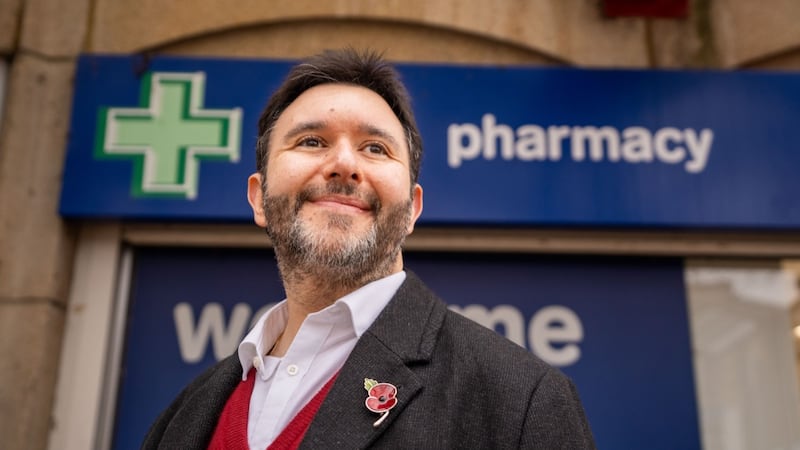
“I’ve had people come to me going, ‘Oh my god, why aren’t getting more money?’
“It’s because we’re not doing more stuff. We haven’t changed the way pharmacy works. We haven’t changed what we’re offering to the NHS.”
IP
One of the new changes that came in the latest contract was the introduction of IP as “an extension” of Pharmacy First and the pharmacy contraception service (PCS).
Read more: ‘In it for the long haul’: Kinnock hails new pharmacy contract
It will see “up to five new prescribing-only pathways” for Pharmacy First, though what these will be has not been announced.
Al-Hassan says this represents a “positive signal” but affirms it “doesn’t have enough funding in it or enough structure in it to be what we want it to be yet”.
“Now it’s time for everybody else in the sector to tell me where I’m wrong, where I’m right, and where I can do better
“It feels more aspiration than delivery. It’s a really good indication of where the DH wants pharmacy to go with acute care, but they still need that roadmap from us.”
When questioned on whether it will be a success when some pharmacists have said they would not take part in the IP service, he believes the opportunity would be foolish to give up.
Read more: ‘To put it bluntly...’ The industry reacts to the contract news
“Some pharmacists don’t do the new medicine service (NMS). I bang my head against the table for that. We have money on the table, and some pharmacists leave it. That has always been an issue with pharmacy and delivery.
“And there’s some great local pharmaceutical committees (LPCs) who really help with pharmacy transformations to service delivery, helping grow Pharmacy First. But there’s people who don’t do Pharmacy First, and there’s always going to be those.
“There will always be some pharmacies that close, but some of those don’t do the business of pharmacy for 2026 very well. Some of them are victims of circumstance. But for those pharmacies that haven’t been willing to respond to the changes in pharmacy, it’s probably the right decision to close.”
Cohesion
Al-Hassan reiterates concerns that have plagued the sector for years on the need for cohesion and providing “one voice” for the DH to work with, and to “ideally” sit behind CPE.
He says CPE should have workforce representation, with organisations like the PDA, APTUK and Usdaw given a formal role.
“We need to make sure that the future that we build is the right thing for our professionals, as well as our profession.
“My challenge to the sector is pharmacy’s future shouldn’t be written by anyone else and not written by one pharmacist MP. It needs to be a collaboration between everyone.
Read more: Pharmacist defeats GP as voters issue a potent prescription for Labour
“Because if you look at community pharmacy nowadays, some of it isn’t a great job.
“Some days pharmacists feel isolated, unable to talk with other healthcare professionals. They can feel overworked, stretched, spread thin.
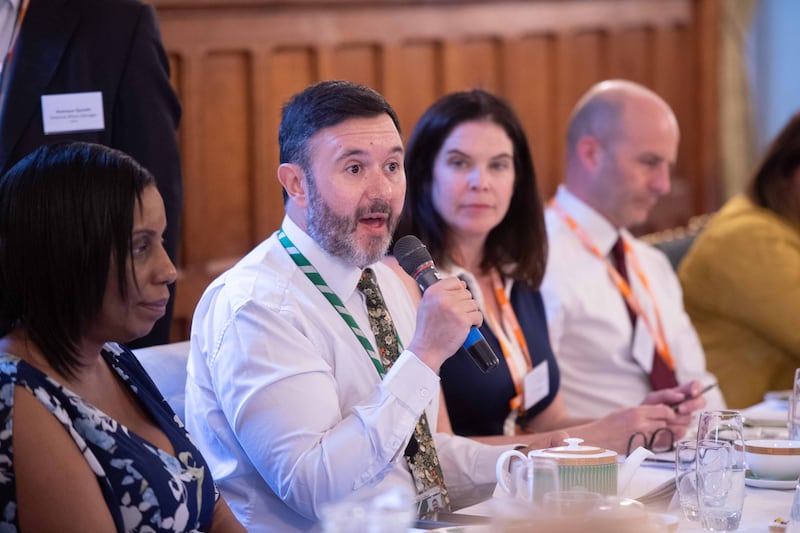
“CPE, GPhC, RCPharm, NPA, IPA, CCA. Everybody needs to feel that stake in their future, that desire to change, that desire to realise what they could be. Now it’s time for everybody else in the sector to tell me where I’m wrong, where I’m right, and where I can do better.”
MP first
No doubt they will. As for Starmer, Al-Hassan gives his verdict.
“It hasn’t always gone right, but I think he’s done what he thinks is best for the country. That takes a lot of heart.”
It’s that last word that lingers when reflecting on some of the less heartfelt things Al-Hassan has said about his former sector, but two years into representing his constituents, it’s evident he’s not forgotten his roots, and he remains steadfast he wants the best for pharmacy, and will do what he can as the APPG chair.
“It’s my job as a champion for the profession to have whatever conversations pharmacy needs me to have,” he says.
“Frequently those are with the minister and the secretary of state, but it’s because I believe in pharmacy.
“And if I thought the profession was dead, I wouldn’t be fighting so hard.”