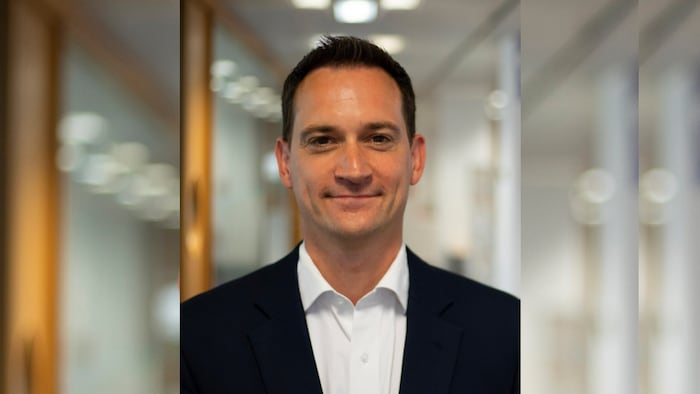
Henry Gregg is a busy man. From twice weekly visits to community pharmacies across the UK to his doorbell and phone ringing during our interview, it’s clear the National Pharmacy Association’s (NPA) new chief executive is in high demand.
As if he doesn’t have enough to deal with joining the pharmacy sector just months after the new funding deal was announced, and just weeks before the government’s 10-year plan was published, Gregg is keen to accelerate harder by meeting with “everyone”.
By everyone, he means all the different organisations that advocate for those working in community pharmacy.
“There’s quite a large number of organisations in community pharmacy,” he jokes.
But there is a serious side. “I’ve been shocked by the level of infighting within the pharmacy sector,” he admits.
“The 10-year plan has given us a big opportunity, but if we’re going to be able to grasp that, we’ve got to have some unity within the sector”.
“Pharmacists attacking other pharmacists on social media and disagreeing in public and on podcasts about how we interact with government is just not helpful,” he says.
“I think firstly, the most important thing the sector can do is stop arguing in public”.
Powerful
Gregg acknowledges there’s “always going to be things we disagree on” but adds that pharmacy bodies need to “find things they can agree on and speak with the same voice on these”.
“I’d like for us to identify those areas where we can work together and create a manifesto or document that has clear lines on these. The more we can have message discipline as a sector, the better,” he says.
Read more: New NPA chief: Letters from the minister and bus crash drama
“If the government feels that we can’t agree among ourselves, it’s much easier to ignore what the sector is saying. But if we can find those areas of policy where we’re aligned, that could be really powerful.”
Gregg has made a start already. He’s met with CPE and CCA chief executives Janet Morrison and Malcolm Harrison, and last week he reached out to both the IPA and the IPCN.
But making contact is just the start. Whether they can all work together and align their key values is another task entirely.
Referrals
Speaking of strained relations, Gregg moves on to the working relationships between GPs and pharmacists.
“If Pharmacy First is going to be as big a success as possible, GPs have got to use the system,” he says.
“But I’ve heard from members I’ve visited that they’re not getting as many referrals as they were expecting – and for some of them not as many as when the scheme first started.

“Some have to go back to the GP on a fortnightly or monthly basis just to remind them to keep giving pharmacists referrals. Obviously, that’s not an efficient way to use the system.”
Read more: ‘Three clicks more than we want ’: GPs refuse to make Pharmacy First
He accepts the success of the scheme is “very variable” across the country, that it is “sometimes a bit complicated”, pointing to early confusion between patients, GPs and pharmacists generating frustration with the process. He says “a lot of work” remains.
It’s one of the reasons Gregg quickly reached out to the BMA and the Royal College of General Practitioners. “We want to start these conversations as early as possible,” he says.
“It would be great if they could both play a role in encouraging all their members to really take advantage of this system, because it will free up GP time for more complex cases. It benefits everyone”.
Pharmacy politics
Another topic that can be viewed as complicated is the funding crisis within the sector.
“It’s really clear the government want an expanded role for pharmacy under the 10-year plan,” he says. “That’s really exciting. But the key is that it’s got to be fully funded. It’s really important the funding gap is closed over time”.

He points to the “willingness to do more” among community pharmacists, saying “people really want to use their skills and the skills of their staff, but they can’t do more for less.
Read more: Pharmacies to trial children’s flu jab service from October
“It would be a big mistake to load the system up with more services without providing proper funding.”
It’s also a big ask to persuade a cash-strapped government to increase the amount of money allocated to pharmacy. But that’s why he stresses unity is so important.
“We need to have a clear vision across the different organisations of what pharmacy can do.
“The government has come up with a clear expanded role for pharmacy, now we need to make sure there’s expanded funding to pay for it”.
And if there isn’t?
I ask Gregg if he would consider casting a vote on collective action for NPA members again in the future – in light of its last-minute U-turn earlier this year – and he says that “we definitely don’t take any options off the table”. But he adds nothing more.
Read more: Collective action – has the NPA lost some respect?
He does expand on his plans for the NPA to “be both a voice and vehicle for change” as the next 10 years play out.
One of the things that needs to be clarified, he says, is “what pharmacies role” in neighbourhood health services will be.

“It’s clear that they’re going to be GP led, which is fine and was to be expected I guess, but it’s really important that community pharmacy is brought in as early as possible.
“If that doesn’t happen, there’s a danger of a duplication of services.
Read more: Trainees ‘surprised’ to graduate without IP qualification
“We don’t want it to be confusing for patients who don’t know whether to go to their local pharmacy or a neighbourhood health centre. But obviously there’s a lot of details to be finalised.”
As for the “biggest thing” he wants for the NPA, it’s for the organisation “to be ready to support independent prescribers” from next year.
“We need to make sure their skills are going to be used,” he says.
“We don’t want to lose them to other sectors. We want them to be happy, and to be fulfilled in their roles”.
Quick Facts
Age: 44
Status: Married with two kids.
Best piece of advice you’ve ever received: Sometimes don't be the first one to speak. Just listen and see how things go. Then make your point.
Best advice you’d give: Do more listening than saying. Listen to everyone, because the more information you can take in, the better you can understand the situation.
Favourite book: The Shadow of the Wind.
Favourite film: La Haine.
Favourite medicine: Probably paracetamol, but that’s pretty boring. I get quite bad hayfever, when I was a child I used to blow up, so I should probably say antihistamines.
Death row meal: I’m quite partial to an Argentinian or Spanish steak.
