Much has been made of Britain’s growing obesity crisis, with 64% of the population now considered overweight or obese.
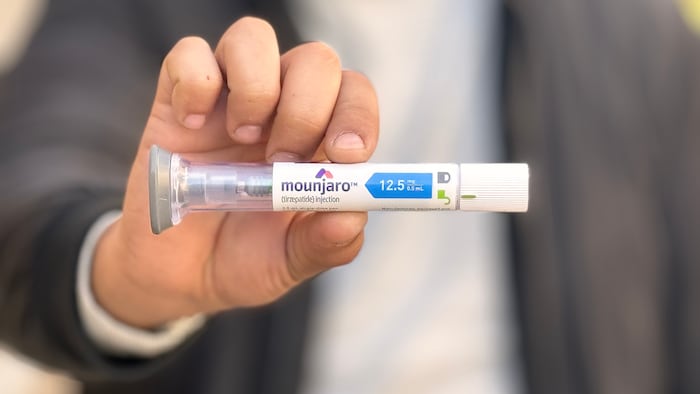
As part of efforts to tackle this urgent health challenge, the NHS does offer access to weight loss injections, such as Mounjaro.
However, for many patients, accessing this support remains far from straightforward.
Read more: Blair report urges online weight loss jab expansion
These medications can only currently be prescribed by specialist weight management clinics.
But with demand already outpacing availability, delays and long wait times are becoming an unfortunate reality.
In that context, the recent recommendations by The Tony Blair Institute are both timely and welcome.
Among other proposals, the report calls for wider access to weight loss drugs via NHS channels, including the option for online pharmacies to partner with the health service to deliver treatment.
This approach makes practical and clinical sense, and could prove beneficial not only for patients, but also for an NHS under sustained pressure.
Read more: NPAI claim raised after weight loss patient had gallbladder removed
The NHS continues to work incredibly hard to meet rising demand across a range of services, and weight management is no exception.
Restricting access to important treatments like Mounjaro to specialist clinics alone risks creating yet another queue that could potentially be avoided.
Widening the access points for patients, including through community and online pharmacy, would help alleviate this pressure while still maintaining high standards of safety and care.
Today’s patients lead increasingly busy lives, therefore making treatments more accessible - particularly those related to preventative health - can have a real impact on long-term outcomes.
If we are serious about tackling obesity, we must consider how to empower patients and remove unnecessary barriers to care.
Read more: Biggest weight loss jab users women aged 30-39 and 50+
By allowing people to access support through a regulated pharmacy service, under NHS oversight, we offer flexibility without compromising quality.
This needn’t be framed as a choice between the NHS and the private sector either. On the contrary, it represents an opportunity for collaborative working, drawing on the strengths of all providers to deliver better patient outcomes.
Pharmacies already have the technology, clinical protocols and experience in place to support patients safely with robust safeguards, proper clinical oversight, and in line with regulatory requirements.
Read more: Pharmacies to pilot NHS weight loss jab expansion, reports claim
The infrastructure exists to make it entirely feasible for the NHS to integrate with trusted providers to expand capacity, and the regulatory landscape supports this kind of model.
Whether a pharmacy is operating online or from the high street, the same rigorous standards apply, and this consistency would ensure that safety and professionalism are never compromised.
In fact, we already see this kind of collaboration in practice through pharmacy-led flu vaccinations, travel health services, and COVID booster programmes.
Extending similar thinking to weight management services feels like a logical next step in improving the health of millions who suffer with weight related conditions.
Read more: Pharmacies must ‘immediately’ remove weight-loss ads, regulators warn
What pharmacy services can offer, alongside NHS providers, is additional capacity.
That capacity can help ease pressure, reduce wait times, and improve access for patients across the country.
We’re well positioned to respond quickly to demand, supported by established systems and scalable technology.
If this can help ensure patients don’t face lengthy delays in accessing potentially life-changing treatments, then it’s a conversation worth having.
Importantly, this isn’t about replacing NHS services, but about supplementing and supporting them. Every healthcare provider shares the same objective: helping patients stay well.
By working together, we can reach more people, more quickly - and prevent the kinds of long-term conditions that obesity is often linked to, such as diabetes and cardiovascular disease.
Read more: Novo Nordisk launches ‘lower cost’ Wegovy online pharmacy
Of course, any model needs to be financially viable. A shared or subsidised payment system could offer a pragmatic solution.
This kind of structure already exists in other areas of healthcare and could be adapted to suit weight management.
For example, the NHS might fund initial consultations or contribute to the cost of the medication, while pharmacies manage day-to-day care.
This balances public funding with patient access, while remaining grounded in the principle of universal care.
As we look ahead, we should focus less on who delivers care, and more on how well that care serves patients.
Read more: ‘Disappointing’ new online pharmacy rules do ‘not go far enough’ warns PDA
The goal should always be to ensure that the right treatment reaches the right person at the right time, and that we do so safely, fairly, and efficiently.
Collaborative working between public and private healthcare services offers one way to achieve that. There is no single answer to the obesity crisis.
But improving access to evidence-based treatments through regulated pharmacy services can be an important part of a broader, patient-centred solution.
It allows us to be flexible, to innovate, and to better serve people at risk of serious weight-related health conditions.
Peter Thnoia is superintendent pharmacist at PillTime