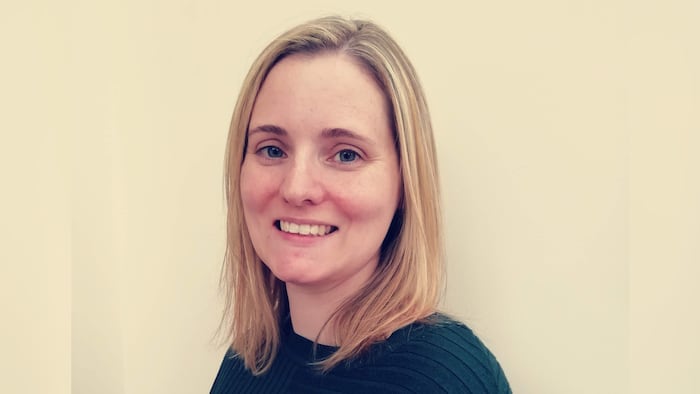
An “awful lot of hard work” has gone into the General Pharmaceutical Council (GPhC) in the last two years since Roz Gittins joined as chief pharmacy officer. “A lot of change has gone on in that time too”, she says.
From sales of weight loss jabs skyrocketing to a seemingly never-ending backlog of fitness-to-practise (FtP) cases, her time at the GPhC has been anything but dull.
With the ever-changing weight loss drug industry, it’s so important to “join up with other regulators”, stakeholders and even the “people that are leading on some of these innovations”, she tells me.
That means “open dialogue” with providers. “It’s really important to be aware of what’s coming up or what they might be developing,” she says.
Couple this with the GPhC’s inspectorate – who are “keeping their eyes near the ground” and witnessing these developments in real time – and the pharmacy regulator is well aware of the challenges it faces.
Reputable
One major concern the GPhC has, however, is that people “aren’t procuring medicines for weight management, particularly the injectables, through regulated pharmacies”, Gittins explains.
It’s “going to be a big focus for us in the forthcoming months” – joined up with other organisations like the MHRA and ASA – to encourage people to use “registered pharmacies” and “reputable prescribers”.
She also speaks a lot about the “online updates and messaging” the GPhC has been sending out over the last year. The regulator has “done a lot of work” to “disseminate” information about the standards the GPhC expects pharmacy teams to implement when supplying “weight management medications”, she says.
This messaging is “a really key part of the process”, but “we need to be live to what continues to evolve and change”, she stresses.
Read more: New online pharmacy regs ‘effective immediately’ amid weight loss risks
There’s no doubt that these updates provide pharmacists with timely reminders on how to safely prescribe such in-demand medication. But the question is – is it enough?
I ask Gittins if she thinks the updated guidance for online prescribing – published last February – needs to be strengthened.
“We don’t want to be seen to be stifling innovation,” she says. But she acknowledges that with new developments “new risks emerge”.
Nevertheless, it “remains with the pharmacies that are supplying medicines to be able to demonstrate to us how they are working in line to meet our standards”, she adds.
Read more: GPhC act after online pharmacies accept AI images for GLP-1s
“Technology is developing and evolving all the time, and we’re not here to attempt to stifle innovation,” Gittins says again.
“In everything we do it needs to be fair and proportionate, and I think our updated guidance is very clear about the need to independently verify,” she continues.
So really, “it’s up to the organisation” she concludes. “The onus is on them to demonstrate how they’re working in line with our standards”.
Speed
Another issue that the pharmacy regulator has been criticised for in the past is the speed at which it handles FtP cases. Complaints to the regulator have been increasing in recent years, but Gittins stresses that this is “not unique” to the GPhC.
“All the regulators have seen an increase in concerns” – probably about 25-30% each just “over this last year”, she explains.
The GPhC, however, has been experiencing this “for the last five years” despite it being “relatively small” in comparison to other regulators. “I think we’re probably on track to hit 10,000 concerns” this year – at least “I wouldn’t be surprised” if that’s the case, she adds.
Read more: GPhC told to speed up processing FTP cases in latest annual report
Gittins explains that most FtP cases currently take “an average of about four weeks” for triage to decide whether to close them or take them further. Considering the number of complaints the GPhC receives, that turnaround time “really is quite something”, she says.
“Obviously we want to keep shortening that time”, she caveats, but “we have some challenges in terms of the legislation we have to work within”, she says. “We are limited by how many committee chairs we’re able to have,” which in turn limits the number of hearings the regulator can do.
This seems to be part of the reason that the pharmacy regulator still has an “age cohort”, which Gittins describes as some of the “biggest, most complex cases” that are left to work through.
“To contextualise this, a couple of years ago about 30% of cases were over two years old and 60% were over a year old,” she says. And now, “less than 11% are more than two years old, which is really positive”.
She notes, however, that the GPhC “obviously” wants to “keep bringing that percentage down”.
Read more: GPhC fails FtP timeliness evaluation again as performance ‘deteriorates’
It comes as the Professional Standards Authority for Health and Social Care (PSA) revealed last September that the GPhC failed to achieve the standard relating to “timeliness of fitness to practise investigations”.
Delays to FtP cases have “negative impacts on registrants, complainants and witnesses and present a risk to public confidence”, it said at the time, adding that the pharmacy regulator has not met this standard since 2028/19.
And on this note, Gittins admits that it “will be a challenge” to achieve the remaining PSA standard this year. “We may have everything good to go, but we need the committee time and availability” to put hearings on. If we’re not able to get more committee chairs, then nothing will change, she says.
The GPhC, however, “remains optimistic” that FtP cases will be worked through in a more timely manner, but it is “under no illusions”, she says.
There’s still “lots to be done”, but we’re definitely moving “in a more positive direction”.
Concerns
Gittins also reveals that the GPhC hopes to publish its “acceptance criteria” in the next few months with the aim to try and limit the number of concerns for the investigating committee to deal with.
While the details of the criteria are not finalised yet, she explains that it will set out the types of things the committee “would or wouldn’t be able to investigate”.
It’s “really important” that we can “educate people about the things we are able to do something about, and the things we can’t,” she says.
“Over 70% of concerns that come in are typically from the general public, so it’s not just the pharmacy sector we need to educate. We need to get that message out” more widely, she adds.
Read more: GPhC to be given power to decide FtP cases without hearing
From our discussion, it is clear that Gittins – along with the rest of the GPhC – has a lot of irons in the fire.
With supervision reforms, pharmacists joining the register as independent prescribers (IPs) and a new chief executive joining in March, 2026 has a lot of changes in store for the GPhC. And with that, comes a lot of work.
As Gittins said at the start of our discussion, “a lot of change has gone on” in recent years. But she’s equally clear there is still “a lot more to do”.
