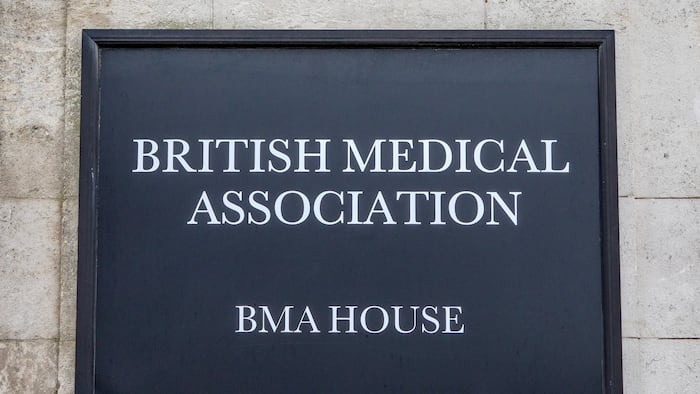
The British Medical Association (BMA) has distanced itself from a letter to GPs suggesting they should not refer patients to the Pharmacy First service, as the scheme has a “significant potential to undermine” doctors.
The letter claimed patients using Pharmacy First are “being seen by less-skilled people to further enable the steady downgrade of patient expectations,” The Times reported yesterday (October 9).
But the BMA has since stressed “this was not a BMA communication” and that the letter was sent “in error” by “North East and North Cumbria local medical committees (LMCs) to local practices”.
Read more: BMA and RCGP warn government not to switch-on GP Connect
According to the report in The Times, the letter suggested that GPs should “overwhelm” hospitals by directing patients to A&E departments, not pharmacies, as it is the “only part of the system that integrated care boards (ICBs) [and] NHSE do not want to see overwhelmed”.
The authors of the letter, however, told the newspaper that the letter was a “back-office cock-up” sent in error, claiming that it showed their “draft thoughts” that were then “transformed into a letter, with their signatures added without their knowledge”.
Letter “sent in error”
NHS North East and North Cumbria chief executive Samantha Allan told The Times that “the implication that patients should deliberately use emergency departments for urgent care to overwhelm departments to make a point is at best professionally inappropriate and frankly dangerous to patients”.
“I am appalled that a medical professional in a senior leadership position can advise a strategy which is proven to harm patients,” she said.
But a BMA statement sent to C+D today (October 10) said this “was not a BMA communication” and that the body had “no role in [the letters] drafting or dissemination”, adding that its content “does not represent the position of the BMA or GPC (general practitioners committee) England”.
“Yesterday the BMA was informed via the media of a letter purported to have been sent by North East and North Cumbria LMCs to local practices,” BMA council chair Dr Tom Dolphin and BMA GPs committee England chair Dr Katie Bramall wrote.
Read more: GPs to vote on ‘immediate’ end to pharmacy blood pressure checks
“LMCs are independent bodies, and the BMA has no formal role in their oversight or conduct,” they said.
“We understand that the letter was sent in error without the knowledge of the authors, and that NHSE has seized upon it, creating division and volatility between the two branches of the profession under arguably the most public-facing pressure and scrutiny: emergency medicine and general practice,” they added.
Dolphin and Bramall reminded general practices that while they are at “breaking point”, “they operate within a wider healthcare system which needs to do more to support urgent unmet patient needs”.
“Turf war”
“Our advice remains that if capacity is reached, practices should signpost patients to NHS 111, their local community pharmacy - also under huge pressure - urgent care centres and walk-in centres,” they said.
And the pair stressed that “emergency departments should only be attended when absolutely necessary”.
C+D also approached NHSE for comment but did not receive an immediate response.
Read more: Pharmacy group urges BMA to reject ‘short-sighted’ GP vote on pharmacy BP checks
Independent Pharmacies Association (IPA) chief executive Dr Leyla Hannbeck said that “the attitudes behind this draft letter are truly shocking and show contempt for patients”.
“The NHS can only meet patient demand by working together, and local pharmacies are an essential part of the mix,” she said, adding that “if we are to deliver the neighbourhood health service patients deserve, GPs need to work together with their local pharmacies”.
Hannbeck argued that “patients will suffer if even a minority of GPs engage in any sort of ‘turf war’ that would have made a 1970’s trade unionist blush”.
Put “differences aside”
And National Pharmacy Association (NPA) chief executive Henry Gregg noted that it is “extremely disappointing if some senior figures in the BMA want to divert people away from the successful and popular Pharmacy First service”.
“That would not help patients and [would] fly in the face of everyone’s ambition to enhance access to neighbourhood health services for our communities,” he said.
Gregg emphasised that “the future of primary care is inevitably going to involve everyone in primary care working together ever more closely”, arguing that “it makes sense to put any differences aside in the interests of expanding and improving sustainable pharmacy and GP services for everyone”.
And an RPS representative said it was “really disappointing to see reports of some local GP leaders in the North East undermining Pharmacy First’s role in supporting patient access to care.
“Pharmacists bring essential skills to the multidisciplinary team and will be critical in delivering new approaches to neighbourhood health.
“This regrettable episode underlines the importance of local leadership and collaboration to make this a success and I would urge the authors of the letter to reflect on this.”
It comes after IT officials from the BMA and the Royal College of General Practitioners (RCGP) urged NHSE last month to postpone GP Connect Update Record’s October 1 switch-on date amid concerns of “incorrect” patient records.
Meanwhile, LMC GP leaders voted “overwhelmingly” in favour of pharmacy blood pressure checks being “terminated with immediate effect” in November, arguing that “failing to fund general practice” and “outsourcing” services to other providers means “more work” is being generated for GPs.
