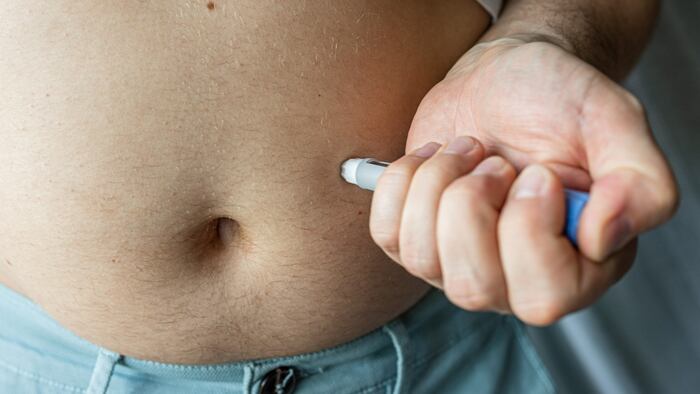
Analysis by the Health Foundation has revealed that the most deprived areas of England have a 32% lower GLP-1 prescription rate than the least deprived, despite the most deprived populations being “twice as likely to be obese”.
The charity warned that the benefits of these drugs “will disproportionately benefit those already advantaged” - while people living in deprived areas, “who already carry the highest burden of premature cardiovascular disease and poor health outcomes”, will “lag further behind”.
The availability of weight loss medications on the NHS is “constrained”, it added, “leaving the private sector as the main way of accessing treatment”.
Read more: Social posts advertising weight loss jabs via affiliate links banned
The analysis is based on the “characteristics of 113,630 patients” who received private GLP-1 prescriptions from online weight management provider Voy between November 2024 and October 2025.
It also found that when adjusting for the higher rate of obesity in more deprived areas, “inequalities in uptake are more pronounced”.
Patients in wealthy areas “are more than twice as likely to access GLP-1 treatments per person living with obesity, compared with those in the most deprived areas”, the charity said.
Read more: ‘Risky dosing hacks’ increase as weight loss jab prices rise
And people living in more deprived areas also “tend to access treatment at a higher body mass index”.
According to the analysis, around 45% of those aged 30 to 49 had a BMI “of 35 or more” when starting the drugs, compared to 30% in more affluent areas.
This “indicates later intervention and a greater accumulated health risk”, it noted, with obesity increasing the risk of “serious conditions including type 2 diabetes, coronary heart disease and several types of cancer”.
Life expectancy gap could “widen”
The charity warned that “given limitations in current NHS provision”, the private‑sector patterns it has highlighted “risk shaping who benefits first from GLP‑1 treatments”.
“The patterns observed offer insight into where demand is currently concentrated and could help to inform more equitable rollout across the NHS as eligibility expands,” it added.
It also cautioned that “unless NHS availability explicitly counterbalances this skew, the healthy life expectancy gap is likely to persist or even widen” even in the event of overall population health gains.
Read more: AI app ‘intelligently targeting’ potential weight loss patients
The Company Chemists Association said community pharmacy was well placed to help mitigate the situation.
“Pharmacies are ideally positioned to help less affluent communities who are disproportionately affected by obesity,” said CEO Malcolm Harrison.
“A targeted NHS-funded service, together with existing private services, would help broaden access to weight-loss treatments.
“This would transform the lives of millions, improving users’ health, allowing many to return to work, driving economic growth and productivity.”
Forced
It comes after a health watchdog warned that patients are being “forced” to privately source weight loss drugs due a “postcode lottery” for NHS access.
Healthwatch reported that patients found using the drugs to be “transformative” but were having “problems” accessing them on the NHS, with some making “big financial sacrifices” to afford the prescriptions.
And it follows the NHS announcing earlier this month that its National Cancer Plan aims to “end the obesity epidemic by accelerating GLP-1 medicine uptake”.
The plan highlighted the NHS’s intention to “work with the pharmaceutical industry to enable more people to access new weight loss services and treatments.”
