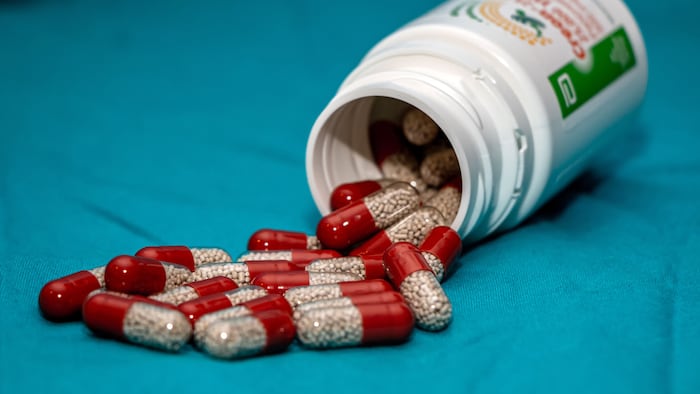
The Department of Health and Social Care (DH) yesterday (October 29) revealed that it has secured “additional volumes” of pancreatic enzyme replacement therapy (PERT) medication.
The comment comes almost five months after the National Pharmacy Association (NPA) warned the government that patients were “skipping meals” and “rationing doses” to access PERT medication Creon, which is used to treat pancreatic cancer.
Read more: Cancer patients ‘skipping meals’ amid ‘worst ever’ stock shortage
Parliamentary under-secretary for the DH Zubir Ahmed said that the department is “aware of ongoing intermittent supply issues” and “continuously assessing” PERT availability.
The DH is “continuing to work with all suppliers of PERT to help resolve the supply issues in the short and longer term”, he said, explaining that through these discussions the department has “managed to secure additional volumes for 2025 for the UK”.
The government is also in “regular communication with suppliers on expected volumes for 2026”, he added.
“Specialist importers”
Ahmed’s comments came in response to a written question from Democratic Unionist Party MP for Strangford Jim Shannon.
Shannon had asked what “assessment” the DH has made “of trends in the availability of pancreatic cancer drugs”.
Read more: Minister downplays ‘worst ever’ Creon cancer drug shortages
Ahmed’s response also revealed that the government has “reached out to specialist importers who have sourced unlicensed stock to assist in covering the remaining gap in the market”.
The DH will “continue to work closely with manufacturers to resolve the issues as soon as possible to ensure patients have continuous access to medicines”, he added.
DH “cannot prevent” all shortages
The government was issued a stark warning about Creon shortages at the start of June after two serious shortage protocols (SSPs) for the cancer drug were extended the previous month until November 21 .
The NPA said at the time that one pharmacist had described the issue as “the worst stock shortage they have ever had to deal with”.
And pharmacies warned of “patients skipping meals” and “travelling distances of over 30 miles” to access the drug, as well as “difficulties in supplying PERT alternatives”.
Read more: DH: ‘No plans’ to review meds shortage impact on pharmacies
But just days later, a health minister appeared to downplay the shortages, saying that while she “[accepted] patients may have concerns”, the drugs were “being provided to those who need them”.
“I believe that we are looking at this very seriously,” she said during a House of Lords debate at the time, but added that “to be honest, we cannot prevent all medicine shortages”.
Read more: CPE: Substitution plans will cause ‘additional costs’ for pharmacies
Meanwhile, the DH last month finally published a consultation seeking views on granting pharmacists “flexibilities when dispensing medicines” to “improve access to medicines”.
But Community Pharmacy England (CPE) last week called for “further expansion” of the government’s proposals, warning that there must also be an assessment of the additional workload and costs for the sector.
