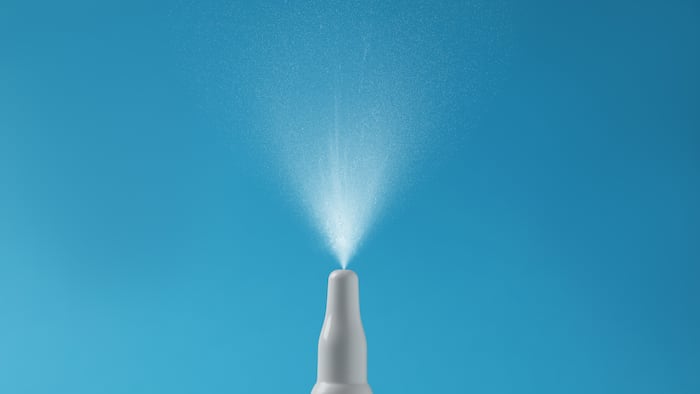
A lower dose of the adrenaline nasal spray EURneffy has been approved to treat serious allergic reactions in children aged four years and over, the Medicines and Healthcare products Regulatory Agency (MHRA) has said.
The regulator announced on June 12 that the approval “means younger children are eligible for a needle-free treatment option for the first time in the UK”.
The spray is a 1mg dose and can be used by “children aged four years and over who weigh between 15kg and 30kg”.
Read more: Allergy training for pharmacists ‘inconsistent’, says lobby group
This increases the range of patients who can use nasal spray adrenaline, as the 2mg product can be used only by “adults and children 10 years and above weighing 30kg or more”.
The spray can be used “even if the nose is congested” and “provides an alternative for younger patients, who until now have relied on injectable adrenaline devices”, the MHRA said.
It added that the treatment is “intended for immediate self-administration at the first signs of anaphylaxis” and should be carried with two doses “in case a second dose is needed before the ambulance arrives”.
“Well-established treatment”
The MHRA said “adrenaline is a well-established treatment for serious allergic reactions”.
It added that “as with any medicine, the MHRA will keep the safety and effectiveness of the adrenaline nasal spray under close review.”
Read more: GPhC investigating pharmacy after IOU epilepsy patient death
It comes after the National Allergy Strategy Group said in April that allergy training for healthcare professionals is “inconsistent”, and called for the NHS to “expand and upskill” the workforce, including in community pharmacies.
And it follows research from Great Ormond Street Hospital finding that “switching patients to pills or tablets could save up to £40,000 per year, per patient for some drugs”.
