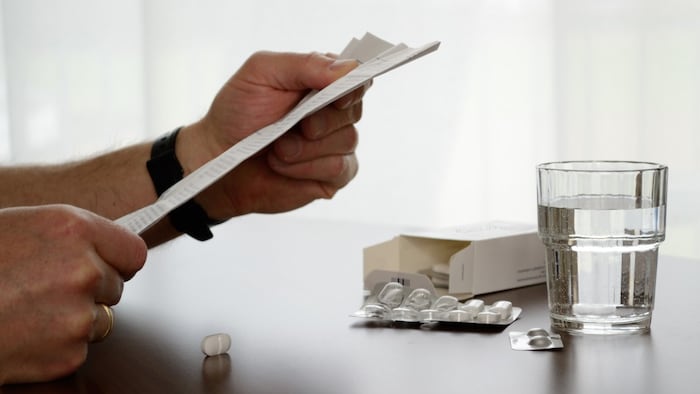
The wording in patient leaflets for antidepressant medicines will be “strengthened” to give “greater clarity on the risk of suicidal behaviour”, the Medicines and Healthcare products Regulatory Agency (MHRA) this week (December 1) announced.
It said that an expert working group of the CHM - advising the MHRA - has “concluded a detailed review” into how patient information leaflets (PILs) communicate “the potential risks” associated with 28 antidepressant drugs to patients.
Read more: Antidepressants added to NMS from October
The review was launched “after concerns were raised by families and patients that current safety warnings” in the PILs for these drugs “did not clearly explain certain side effects”, it added.
The regulator said that the working group has heard “directly from families, patients and mental health support organisations” over the past 18 months.
“Real-world experiences”
The working group has “considered the real-world experiences of those affected, together with the scientific literature, to understand how warnings could be made clearer and more easily understood by patients”, according to the MHRA.
Following the review, the CHM has “advised” that the wording used in the PILs for antidepressant medications “should be strengthened to provide greater clarity on the risk of suicidal behaviour”, it added.
And it said that the revised text “will be further developed through user testing to ensure it is as clear and effective as possible”, while the medicines regulator is “exploring a range of engagement options to take this advice forward”.
Read more: LPC chiefs: Pharmacies should be mental health ‘first point of care’
The MHRA also revealed that the CHM has recommended changes to the PILs for “certain antidepressants” to “better reflect patient feedback and emerging evidence on the potential for sexual dysfunction that may continue after stopping treatment”.
It said that it has agreed to several “additional communication measures” including:
- A patient card to be “given to patients by their healthcare professional or included in the medicine pack” and “available digitally” that will “further highlight the risk of suicidal behaviour”
- An ancillary leaflet, “developed with wider healthcare system partners”, that will “support discussions between patients and healthcare professionals” on “the risk of suicidal behaviour”
The regulator is also “engaging with the National Institute for Health and Care Excellence (NICE), the British National Formulary (BNF) and the Royal Colleges of General Practice and Psychiatrists to improve consistency of safety messaging in a range of additional communications”, it added.
“Regulatory processes ongoing”
The MHRA recognised that “many families and patients are waiting to see the final products” that have been created following the review, but said that “there are limitations in the level of detail” it can provide “while regulatory processes are ongoing”.
“As soon as the regulatory position is finalised, the MHRA is committed to communicating on the final products as quickly as possible,” it said.
Meanwhile, patients “should continue taking their medicines as prescribed and not stop or change treatment without first speaking to a doctor or mental health professional”, it added.
Read more: Antidepressant SSP issued amid ‘large number’ of invalid claims
It comes after the expansion of the new medicine service (NMS) to “include depression as an eligible therapeutic area” in October.
And it follows pharmacy leaders stressing earlier this year that “the logical next step” is for pharmacies to become the first port of call for patients’ mental and physical “health journey”.
When life is difficult, Samaritans are here – day or night, 365 days a year. You can call them for free on 116 123, email them at jo@samaritans.org, or visit www.samaritans.org to find your nearest branch.
