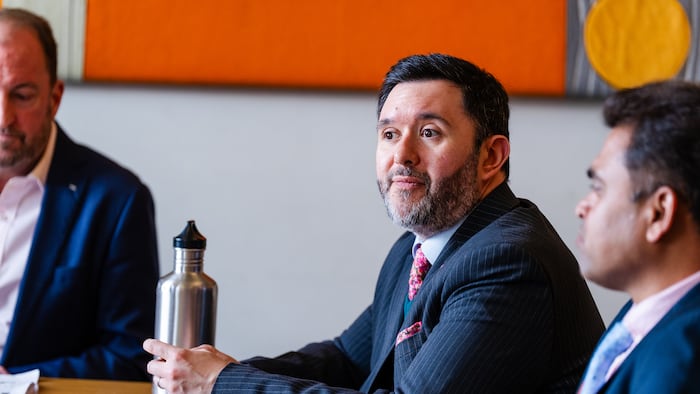
The chair of the All-Party Parliamentary Group (APPG) on Pharmacy has urged the government to “set out a road map for a six-year funding settlement of £600m” for the sector.
Speaking at a Westminster debate on funding for local pharmacies yesterday, Labour MP for North Somerset Sadik Al-Hassan said the settlement is needed to invest in pharmacy’s workforce and close the funding gap “before we lose any more of these vital neighbourhood services”.
Read more: MPs call for more ICB powers to act on failing pharmacy providers
“With some reports suggesting that only 14% of pharmacies are profitable, I am asking for money not to make the job of pharmacy easy, but to make it possible, because it should not be this hard,” he said.
The debate was secured by Conservative MP for Leicester East Shivani Raja, who said the sector is “reaching a tipping point” and called on pharmacy minister Dame Diana Johnson to address “four specific, practical areas”.
Read more: Hundreds of pharmacies consider closure over business rates
Raja first called for a reform of the reimbursement model, which she said currently “fails independent providers”.
She said payment recalculations should “reflect the actual market acquisition prices paid by the independent pharmacies, rather than relying on assumed bulk discount rates that small independent businesses simply cannot access”.
Read more: ‘It’s not the government’s job to make pharmacy owners happy’
Raja also stressed that the pharmacy contract must be updated to “ensure that core funding is predictable, transparent and fair, rather than heavily dependent on variable, patchy referral targets managed by NHS bodies over which pharmacy owners have no control”.
Read more: Government wants pharmacies to be a ‘first point of contact’
And she urged Johnson to “address the cumulative tax and cost burden facing small health providers”, including “reviewing business rates liabilities and the impact of the employer national insurance contribution increases on independent high street providers”.
The MP noted that “unlike other small high street businesses, community pharmacies receive no business reliefs on their premises”, and said this is a “major oversight”.
Read more: Sector slams pharmacy’s exclusion from business rates support
The final area Raja called on Johnson to address was pharmacy’s “acute workforce crisis”, arguing that workforce planning “must balance the expansion of primary care roles with the baseline staffing requirements of high street community pharmacies”.
“As policies such as independent prescribing expand, ministers must ensure that independent pharmacies are provided with the direct resource and funding needed to put clinical roles into practise safely,” she added.
“Rocketing drug prices”
A number of MPs attending the debate spoke in favour of increased support for community pharmacy - including former prime minister Rishi Sunak, who asked whether more could be done to “collectively raise awareness” of Pharmacy First, a scheme introduced during his leadership.
Liberal Democrat MP for Newbury Lee Dillon also highlighted the issue of pharmacies dispensing at a loss, which he revealed was particularly grave in his constituency.
Read more: Funding and IT ‘critical bottlenecks’ to IP rollout, NPA report warns
“On visits to Lambourn pharmacy and MedWell chemist in Newbury, staff told me that current funding would quickly be absorbed by rocketing drug prices, with some pharmacies paying 14 to 15 times more for prescription medicine than at the start of the year,” he said.
Dame Johnson responded that the government’s investment, reforms and 10-year health plan all point to a “stronger, sustainable community pharmacy sector”.
“This government are committed to working with the sector to deliver that vision,” she said.
Read more: Pharmacies ‘essential’ to high street, say three-quarters of Brits
It comes after MPs called on the government earlier this week to give integrated care boards more power to act against failing pharmacy providers and protect employees’ pay and rights.
And it follows almost half of pharmacies considering closing their doors due to increased business rate bills, according to National Pharmacy Association analysis published last month.