Community pharmacies are using more wholesalers to find the best prices and reduce margin pressures, according to data from IQVIA.
Speaking at the Healthcare Distribution Alliance (HDA) annual conference last week , IQVIA UK market intelligence senior director Chris Pilsbury said 79% of community pharmacies are using four or more wholesalers in the year to November 2025.
More than 70% of independent pharmacies used six or more, the result of margin pressures “causing community pharmacy to shop around,” said Pilsbury.
Read more: BREAKING: Lilly hikes Mounjaro price to address ‘inconsistencies’
IQVIA data also showed 2.2 billion packs of medicines had been dispensed in the year to November 2025, an increase of around 300 million over the previous four years.
Community pharmacy accounts for almost 90% of this volume, and Pilsbury said the UK is doing “really well” in generics utilisation as around 80% of medicines dispensed are generics.
Tariffs
Of the top 20 dispensed medicines last year, 13 had a drug tariff price of £1 or less.
Across all generics dispensed in the UK, 54.8% of them fall into the £1 or less drug tariff price category.
In the next drug tariff price category, 37.5% of generics are priced up to £5.
“So, 90% of generic medicines have that drug price less than £5, and this is putting immense pressure on the ability to deliver those medicines to patients,” Pilsbury said.
Read more: CPE creates website to encourage patients towards Pharmacy First
“There are obviously sustainability concerns around how long this can go on for without increased shortages, without manufacturers deciding it’s not cost effective in the UK anymore to provide medicine.”
Community Pharmacy England research and insight director James Davies said community pharmacy is “running on empty” and the current system of “squeezing the funding” is not the right way to support the sector.
Health and Social Care parliamentary under-secretary Dr Zubir Ahmed MP said the NHS is “ramping up production to businesses based here in Britain to invest in Britain” to support the medicines supply chain.
Read more: ‘Baffled’ and ‘concerning’: Opposition to new tariff change
“The UK will most likely always depend on global markets for our medicines, but as we continue to invest in our manufacturing capability here at home, medicines made in Britain can shorten the time it takes to get them onto the shelves.
“It means you will not always be at the mercy of international crises, geopolitical conflicts, or even ships getting stuck in the Suez Canal,” he said.
Weight loss
Pilsbury said the number of services that community pharmacy does has “steadily increased” and needs to be supported by “sustainable funding”.
In the last 12 months, community pharmacy delivered around three million Pharmacy First consultations and around 60% of them were for acute sore throat and UTI treatments.
But the biggest growth in private medicine dispensing happened “rapidly post-pandemic”.
Read more: Government to ‘review’ margin system and faster Cat M process
In July 2023, 98.8% of medicines dispensed in community pharmacy hospitals were publicly reimbursed, with only 1.2% being private prescriptions, according to IQVIA and NHS data.
But last July, private prescriptions nearly quadrupled and accounted for 4.7% of medicines.
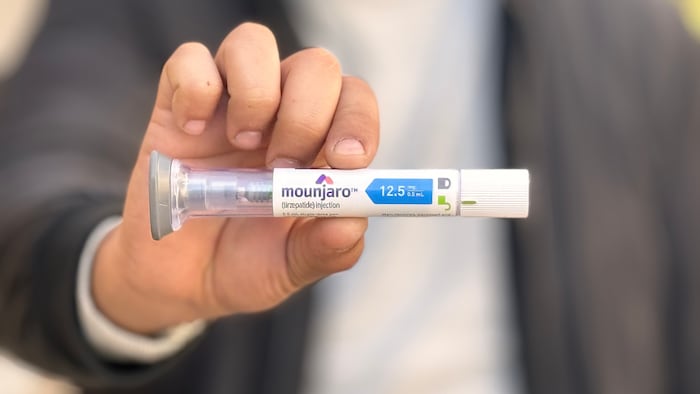
Pilsbury said this was partly down to longer times on NHS waiting lists and in A&E, but also the significant increase in people taking weight loss drugs Mounjaro and Wegovy.
Read more: IN FULL: Number of pharmacies drops below 10,000 in 20-year first
The UK weight loss market for just these two drugs has seen an average monthly volume growth of 16.3% since February 2024, when it dispensed around 127,000 Mounjaro and Wegovy items.
By December 2025, 1.9 million Mounjaro and Wegovy items were dispensed, with August 2025 showing a record high of 3.6 million items dispensed.
Patients bought more than one month’s supply of medication during that month after manufacturer Eli Lilly announced a price increase for Mounjaro to come in place for September.
Read more: Lilly implements Mounjaro ‘order freeze’ for UK wholesalers
Pilsbury said around 50% of private medicines were dispensed by online providers, with “about 20% from bricks and mortar pharmacies with digital solutions” like Boots and Superdrug, and around 20% coming from independent pharmacies.
IQVIA vice president Simon Tottman said in the global market, there will be “lots of exclusivity of semaglutide” in markets such as India, China, Brazil, Turkey and Canada, and it could lead to “greater volumes” of medicines and “price reductions” for them.
He added there will be a move “towards a reimbursement market” and new patients will come to the market as there will be “a move from injectables towards oral therapies” after the first oral GLP-1 weight loss drug was launched in the US earlier this year.
Dispensing
Pilsbury also shared NHS Business Services Authority (BSA) dispensing data that showed a 6.7% decrease in the number of community pharmacies in England from September 2021 to September 2025, with around 10,400 currently open.
He said across the same period, each community pharmacy was dispensing 21.1% more items at around 9,600 on average per month.
Over the last five years, independent pharmacies account for a greater share of the pharmacy market at 46.7%, overtaking the chains.
Read more: LATEST: DH reveals new Mounjaro NHS reimbursement prices
Supermarkets, regional and national chains dispense less items compared to their market share, with distance-selling pharmacies (DSPs) notably selling more compared to their market share.
National chains have a 24.6% market share and dispense 21.8%, whereas DSPs have a 3.3% market share but dispense 7.1% of the items market share.
Pilsbury said this was down to the different business models each of these types of pharmacies operate, with independents more reliant on prescriptions, while supermarkets and chains have more self-care, health and beauty retail offering.
It comes as earlier this month, CPE, the IPA and the NPA challenged plans to introduce category H to part VIIIA of the drug tariff in March, which will change some of the reimbursements for products in category C.